CHASING SNOWS: THE SNOW GOOSE CONSERVATION HUNT
Category
Tips & Tactics
Read time
6 min
Last updated
May 7, 2026
Snow geese get blamed for stripping fields bare. Here's the complicated truth behind the conservation hunt.
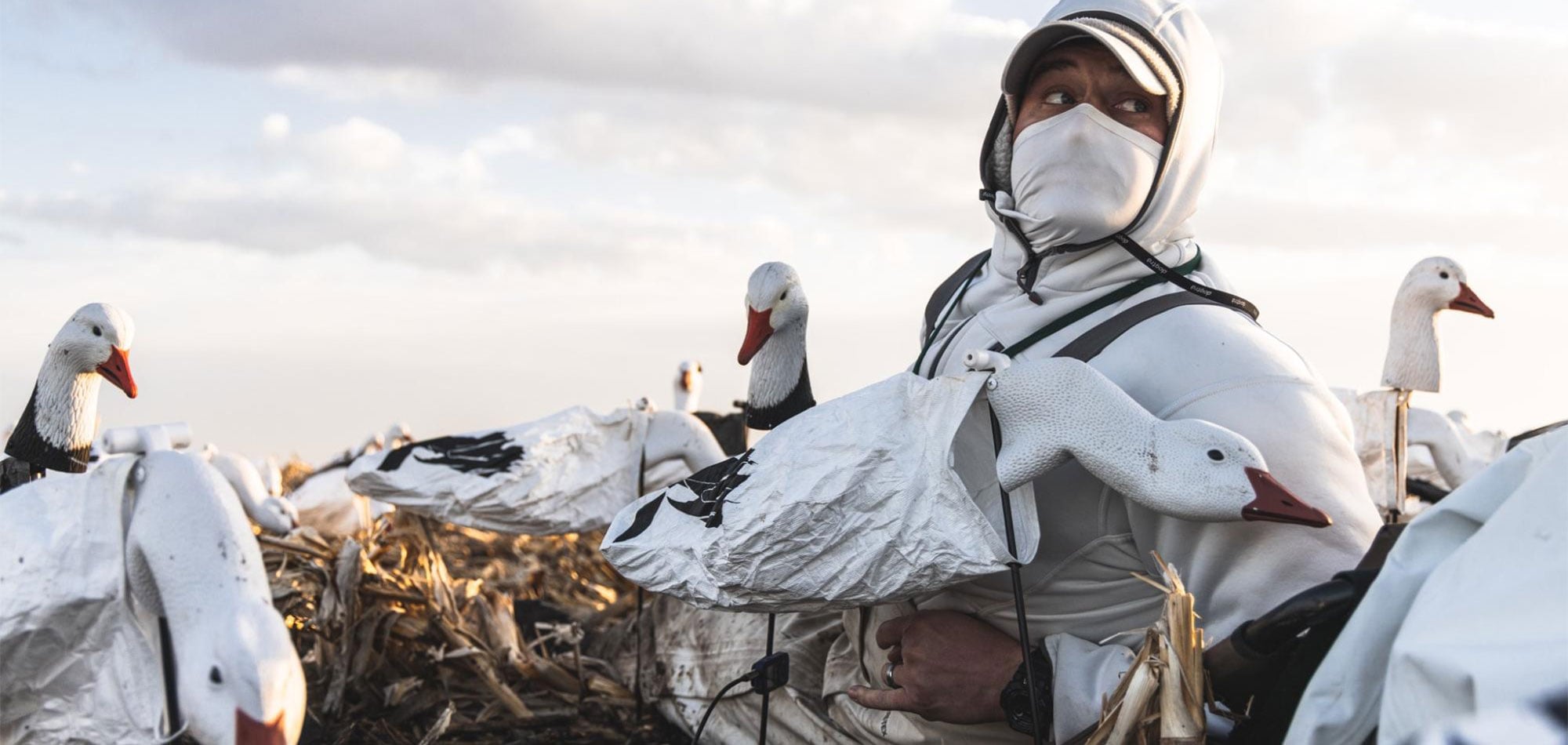
Snow geese suffer from bad PR. Often labeled an ‘invading horde’, they’re blamed for stripping wetlands and agricultural fields bare, leaving behind visibly damaged landscapes. Because of this, some even revel in the damage they can inflict when hunting snow geese.
But the reality is more complex. We dig into what’s driving the snow goose population surge and the role hunters play in restoring balance. Understanding the ecological story behind snow geese - and what it truly takes to participate in a responsible conservation hunt - reveals a narrative far deeper than the headlines suggest.
Key takeaways:
Snow goose populations have exploded.
Snow geese need food, and often that comes at the expense of North American croplands.
Population management though conservation hunts strikes a balance between effectiveness and cost-efficient sustainability.
WHY ARE SNOW GEESE A PROBLEM?
For years we’ve heard that there are too many light geese, their populations growing exponentially, as they feast on American grain fields. But why is this?
In the past, the birds struggled to find food in coastal marshes. But they are now spending their winters feeding in southern croplands along their migration routes. Gathering in large, highly visible flocks, they eat rice, corn, and beans, then move on to winter wheat fields where they can strip crops and damage cover fields. In late spring and summer, they return north to their breeding grounds.
Having fattened themselves on North America’s agricultural abundance and grown to number in the millions, their population has become more than the fragile northern landscape can support.
Their intense feeding also harms other shorebirds that nest in the same areas.
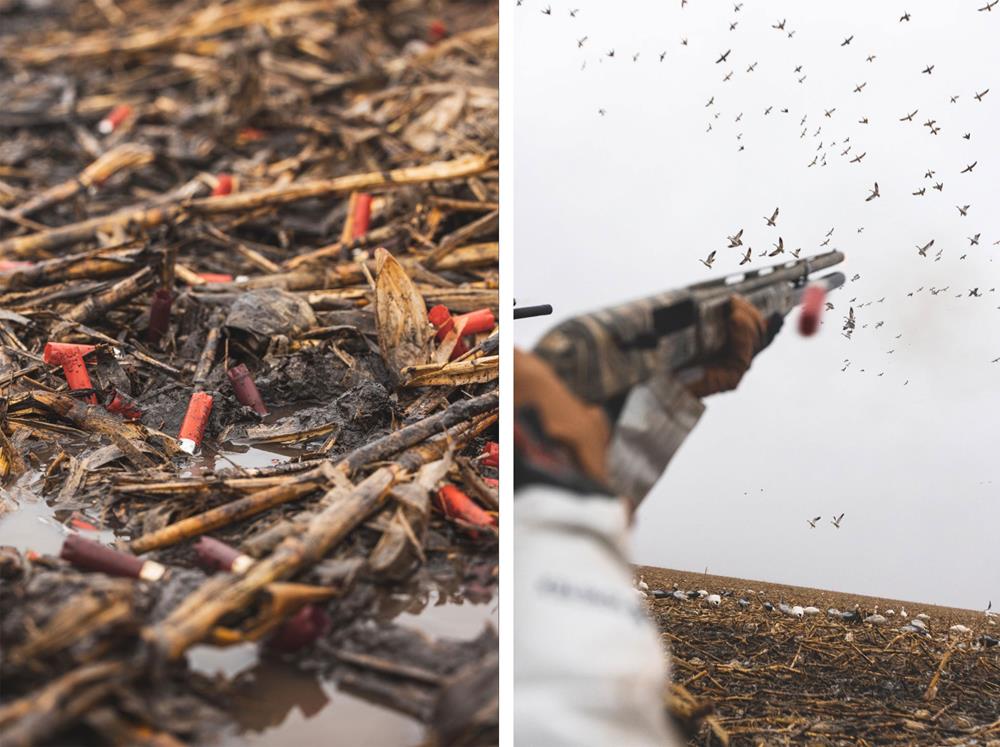
Discarded shells on the ground (left image), Pass shooting a large volley of snow geese (right image)
There’s no malice in snow geese, though. It’s important to remember that. They are driven by the most basic of motives: to feed and breed and exist.
Now, they are doing so to their peril. They persist, and in doing so they degrade the places needed for life. It’s easy to relate, as a member of a species with an eerily relatable track record.
WHAT IS A CONSERVATION HUNT?
A conservation hunt is a regulated hunt designed not simply for sport, but to control a wildlife population that has grown too large and is causing ecological damage, as is the case with snow geese.
SNOW GEESE CONSERVATION HUNTING
Since 1999, a federal conservation order has called upon hunters to take snow geese (and also white Ross’s geese) on their return migration each spring.
This additional season was instituted with the intention of reducing light geese numbers in a significant way before they make it back to their spring staging/breeding grounds. Management agencies have tried to encourage liberal harvests of light geese as a form of conservation hunting by allowing electronic calls, unplugged guns and extended hunting hours.
Waterfowlers have taken on the Sisyphean task of trying to right an avian population that’s become a danger to itself. It’s undoubtedly an ambitious pursuit and if the last 20 years are any indication, far more difficult than many initially expected. Read more about what it takes to be a waterfowler.
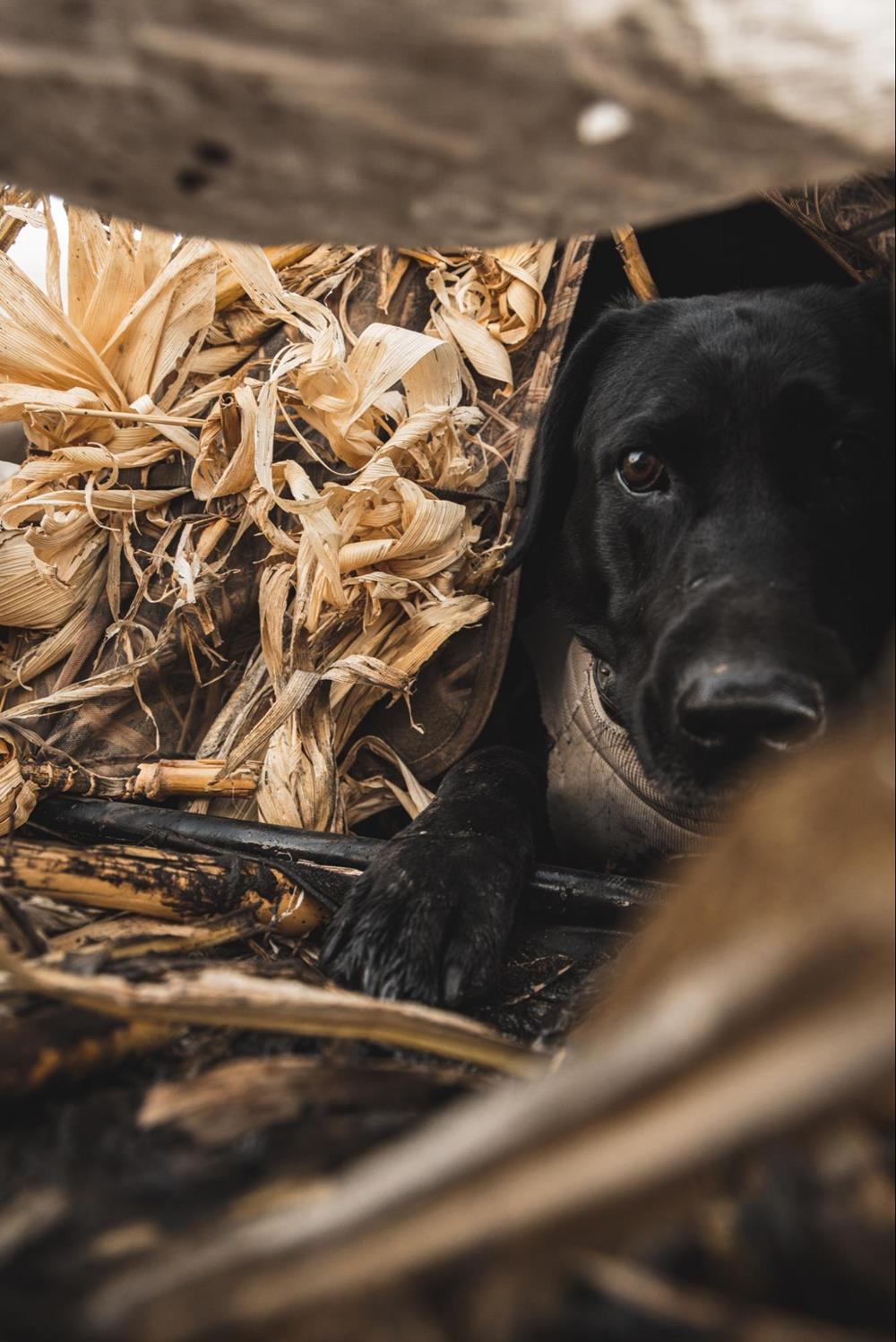
A black dog waits to help retrieve waterfowl in the field
This presents an ethical consideration for hunters. How do we participate in a hunt where the numbers of birds harvested takes such a prominent role? How do we do so without devaluing the resource? I’d argue that we maintain our integrity by putting our impetuses for becoming hunters at the forefront. It’s worth reminding ourselves why we fell in love with waterfowl in the first place, because it sure as hell wasn’t for ease or efficiency.
It was the calling or the sunrises or the dog work, but it’s never been just about the end result. We’re hunters not plunderers. Part of nature, not conquerors of it. If we aren't careful, it’s easy to think of light geese as the dregs of the wing shooting world. Conservation can become muddled with elimination and we start to miss the plot of it all.
Explore the projects and organizations we support through Ecosystem Grants.
The effort involved in a snow goose spring conservation hunt helps me to keep perspective. Once you consider the investment of time required to scout, find huntable numbers of birds, gain access to land and compile equipment, it’s a wonder that so many folks are so committed to the chase. That drive is one of the defining characteristics of a waterfowler. It’s optimism incarnate, the result of many mornings waiting for a gust of wind or a ray of sunlight to change your fate.
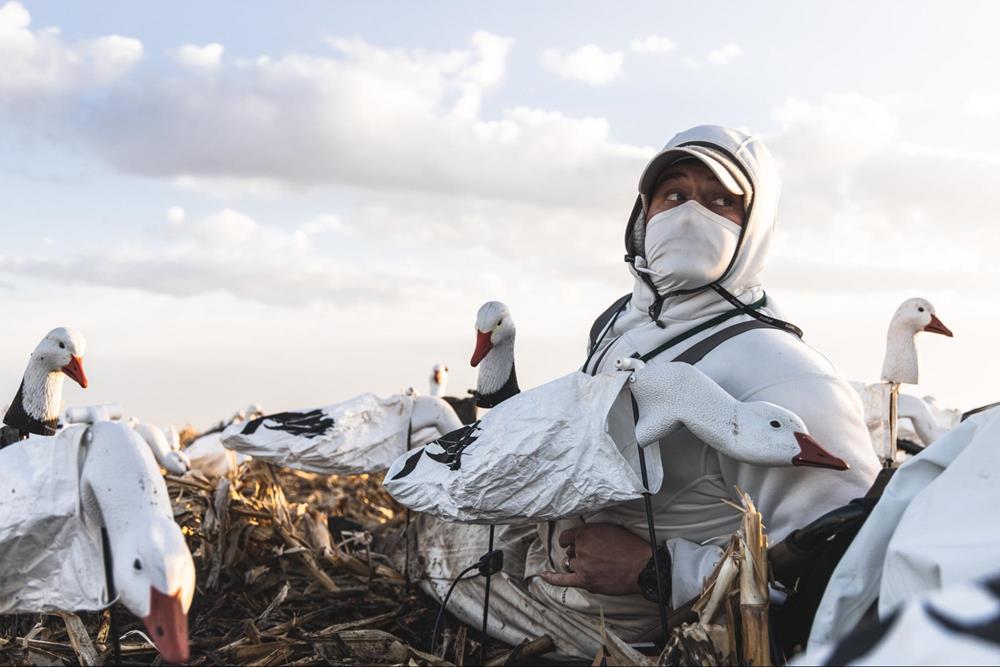
A hunter camouflages in all white while hunting snow geese
SNOW GOOSE HUNTING CLOTHES AND GEAR
What to wear snow goose hunting?
WHY HUNT SNOW GEESE?
We endure because of the ineffable joy brought on when things go right. There’s a beautiful raucousness that comes with every successful snow goose hunt. An orchestral mix of textures and sounds that wash over you like a frothing, Arctic wave. Amidst a sea of attentive decoys and flapping wings sometimes stars align and you lose yourself in the vortex it creates.
It’s a squawking, rolling, whirling collective, the bird version of a stampede. For a moment you can imagine what it would have been like to witness herds of buffalo thundering across the prairie with no beginning or end in sight.
As quickly as it began, the spectacle corrects itself and the flock goes someplace else. A few moments before, the sun couldn't be seen through the birds, but suddenly, the landscape is as void and desolate as a junior high dance floor. Then, it’s time to marvel at the birds in hand and tip our hats to the ones that got away. We’ll excuse our mistakes and blame the sun or the dog or the wind. Then we’ll rest and do it all again—ever the optimist, ever the waterfowler, ever the hunter.
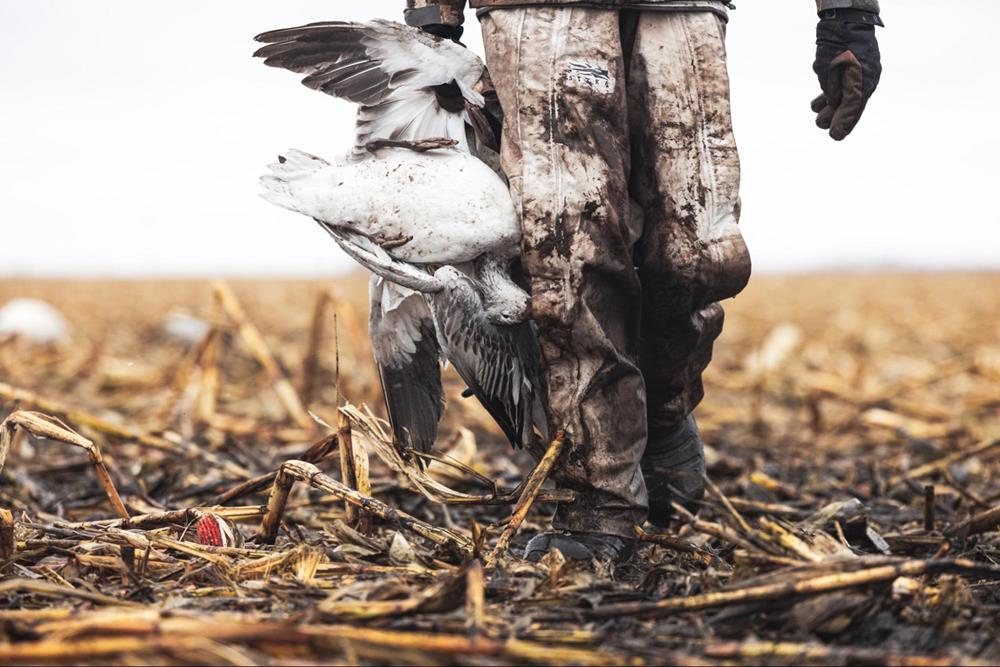
A hunter retrieves his downed goose
Snow goose hunting tips:
Disappear completely
Adult snow geese have seen it all. If your setup doesn’t disappear into the field, they’ll stay out of range. Concealment comes first.
Scout with intention
Find where birds want to be — not where it’s convenient to hunt. Watch the evening feed. Note wind direction, traffic lines, and how birds enter the field. Snow geese don’t tolerate mistakes. Being exactly right matters.
Create movement and sound
Migration days are built on energy. Windsocks turning in a crosswind. Flyers above the spread. Constant noise from the caller. A spread that looks alive will pull distant flocks lower and keep committed birds working.
SOURCES & FURTHER READING…
When to hunt snow geese?
The short answer is anytime you have an open snow goose hunting season and the birds are migrating. Check with your local sport shops for an idea of when the snows are coming through your region.
Where is the best state to hunt snow geese?
While snow goose hunting is prevalent across most North American flyways, it’d be hard to argue with the Central flyway, specifically Missouri, Arkansas, The Dakotas, and the Saskatchewan prairie.
Snow goose hunting in Arkansas, Missouri, the Dakotas, and the Saskatchewan Prairie is best. Colorado, Louisiana, Mississippi, Texas, and Washington State are also excellent snow goose hunting states.
Can you hunt snow geese in Texas?
Snow goose hunting absolutely happens in the Lone Star State. Focus on Late January through March.
What do I need to hunt snow geese in Arkansas?
Aside from a shotgun, shells, decoys, dogs and your gear, access to where snow geese are feeding is critical.
To hunt snow geese in Arkansas, you need an Arkansas Conservation goose hunt license/permit, a Federal Duck Stamp, a place to hunt, and snow goose hunting gear. The Delta LT Jacket, Delta LT Bib, and Ventlite GTX Boots will keep you watching monster spins this spring.
What license do I need to hunt snow geese in Missouri?
You’ll need a Conservation Order Permit on top of your MO waterfowl license for snow goose hunting in Missouri..
How to hunt snow geese?
The majority of snow goose hunting happens in dry fields, where layout blinds rule the day.
What size shot for snow goose hunting?
#2, #1, BB or BBB is most common with steel on a conservation snow goose hunt. If shooting a non-toxic like bismuth, #2 and #4 are best.
What do you do with snow geese? / Are snow goose good eating?

Stay Connected
Join our community.
Get the latest gear innovations, SITKA films, expert insights, and more delivered to your inbox.
By providing your email and clicking "Sign Up", you agree to receive marketing emails from SITKA GEAR. You can unsubscribe at any time by clicking the link in any email. For more details, see our Privacy Notice and Terms & Conditions