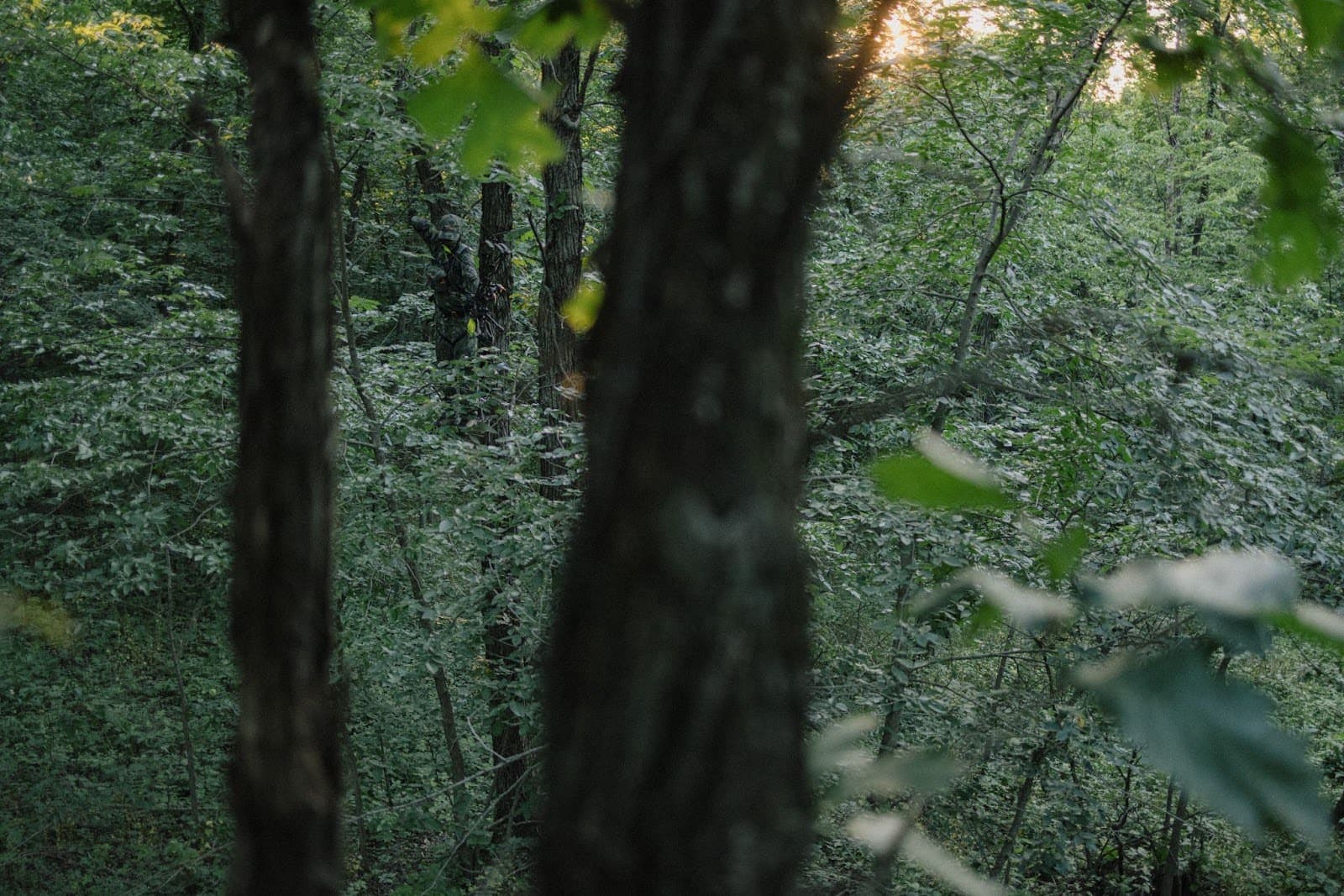
Deer hunting scent control is a divisive topic. While old-school hunters will tell you to wear your usual deodorant and just hunt the wind, the tech-savvy will recommend medicine cabinets full of scent-hiding products.
Which approach is best?
In this guide, we’re breaking down the best scent control approach for deer hunting - one that works for you. From off-season tips to in-the-field mitigation techniques, you’re about to become a master of scent elimination and odor control.
Why Scent Control Is Crucial For Successful Deer Hunting
While choosing the right hunting gear is a must, understanding how deer sense smells and what you can do about it is just as critical for every hunter. Let’s cover some scent control tips for deer hunting that will help you approach odor elimination.
The Power Of A Deer’s Nose
A whitetail’s nose and sense of smell is much stronger than a human’s:
Whitetails have relatively broad nasal openings; they inhale a lot of scent data at once.
They have 297 million olfactory receptors (for detecting scent) - humans only have 5 million.
A whitetail’s olfactory bulb (the part of its brain that processes scents) is four times larger than a human’s.
Why have deer evolved such powerful scent detectors? Because scent is their primary defense mechanism. Deer don't just detect scents - they're hardwired to flee from certain ones. So, it’s important for hunters to understand which smells repel deer. Human odour ranks among the smells deer instinctively associate with danger, alongside predator urine and smoke. However, deer also use scents to aid in mating activities and find food.
Interested in how deer sense? Here’s how deer see color.
The Limits Of Scent Control
With the above in mind, you might be thinking, “Why even learn how to hide scent from deer? Human interventions are no match for that kind of odor detection power.”
While you can’t completely eliminate human scents ahead of a hunt, you can:
Mitigate scents – With a variety of techniques and tools (which we’ll explore below), you can vastly reduce your scent profile and improve your stealth.
Leverage animal instincts – During peak mating season (the rut), you can distract deer from human scents with more overwhelming scents - like doe estrus, or urine collected from captive does in heat.

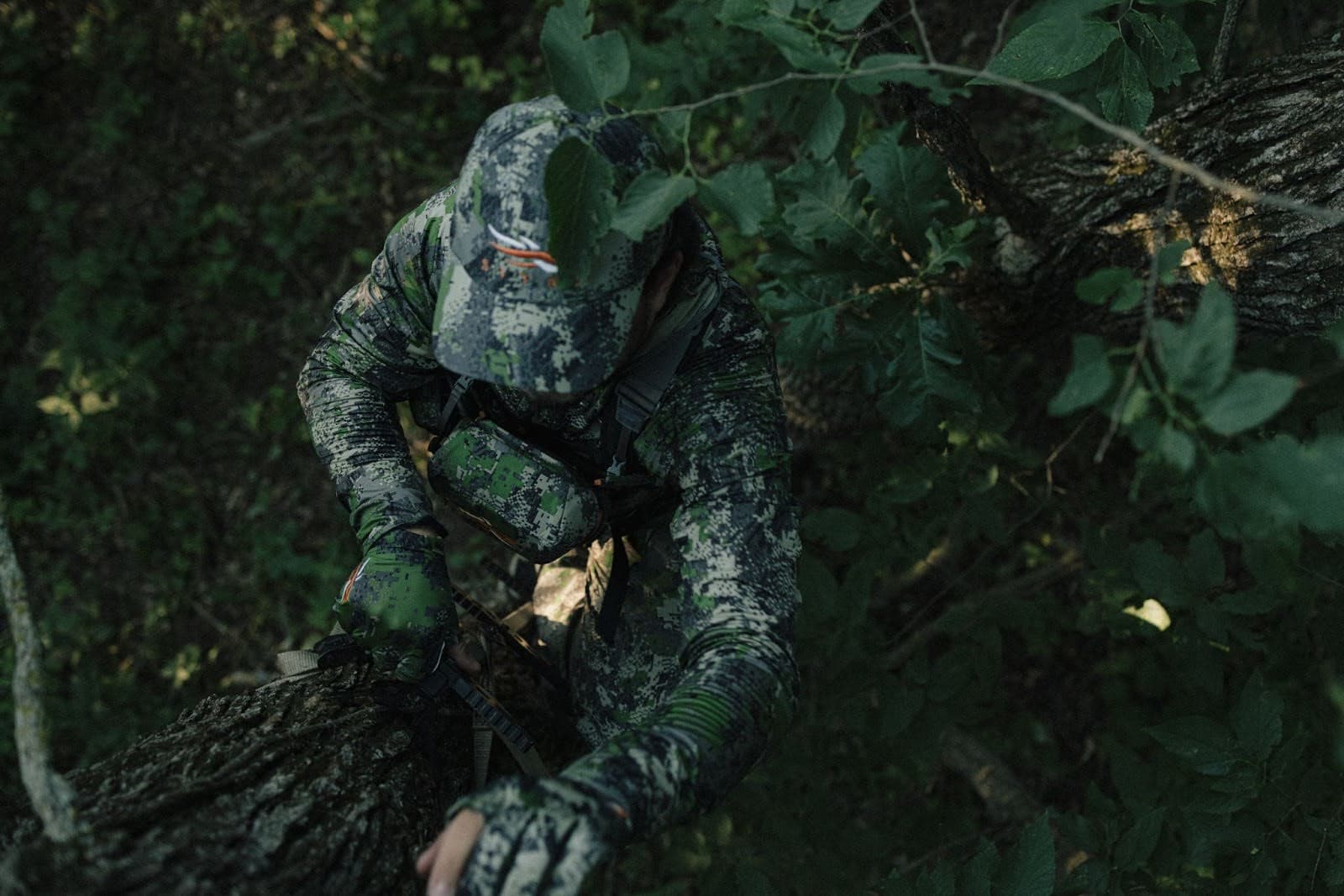
A hunter in a forest wears camo and keeps close to a tree - a form of scent control for stalking deer.
Pre-Hunt Scent Control: Building The Foundation
“When out in the field these are the tried and tested methods I use to block my scent from deer” - SITKA Ambassador
Let’s start with three pre-hunt tactics you can use to mask your scent:
Prepare your clothing – Wash your whitetail hunting clothes (including specialist, scent control gear and any scent-blocking outer layers) in scent-free detergents and store them in airtight containers (like vacuum bags).
Adjust personal hygiene – Don’t forget about your body odors; the morning of the hunt, bathe with scent-free shower products, use fragrance-free deodorant, avoid body sprays and cologne, and use mouthwash with alcohol to neutralize odors.
Avoid pungent foods – Before climbing into the stand, avoid strong-smelling food and drinks like coffee, garlic and seafood.
Our Intercept Collection is designed to keep you hidden. The fabric technology mutes sounds and body odors that might otherwise give you away.
On-Site Scent Control: The Hunt Begins
After prepping, take the following precautions in the field to conceal your odors once the hunt begins:
Get dressed in the field – Instead of donning your clothes at camp or at home, where they can pick up food smells, campfire smoke and other odors, consider dressing in the field . Alternatively, you can add scent-neutralizing layers (i.e., merino wool hunting clothes) before walking to the stand.
Mask your scent – After dressing, you can also use cover scents: pungent plants from the environment (like pine needles) or doe estrus (the bottled scent or urine collected from a doe ‘in heat’). Doe estrus is strong; you only need to put some on the bottoms of your shoes or at the hem of your hunting pants to cover your scent.
Navigate with scent in mind – Pace yourself as you walk to the stand to avoid working up a sweat. To make as little impact on the scent landscape as possible, take the shortest route to your hunting spot.
During The Hunt: Maintaining Scent Control
Once you get to your blind, you can use wind management to continue your scent control throughout the hunt.
Positioning Yourself With The Wind
Position yourself downwind from where you expect deer to walk out. Since your scent won’t be wafting in their direction, they won’t be able to smell you.
However, you can sabotage efforts to hunt the wind by walking in (or parking) upwind from your spot. By doing so, you might still spread your scent in an area where deer could smell it.
You’ll also need a few key resources to hunt the wind:
Multiple stand options
Information about where deer have been walking out (from game cameras, for instance)
Awareness of wind direction
Without these, you’ll need to lean more heavily into scent control tactics instead of relying solely on wind management.
What Smells Do Deer Hate & What Attracts Them?
Understanding which scents trigger alarm in deer and which draw them in means you set off with more tactics in your back pocket.
Smells deer that repel deer: human body odour, gasoline and exhaust, artificial fragrances (cologne, detergent scent, fabric softener), cigarette smoke and predator urine.
Smells that attract deer: doe estrus (particularly effective during the rut), tarsal gland scent, fresh acorn, apple and corn.
The best scent control strategy for deer hunting uses both sides of this equation: minimize what repels them, introduce what draws them in.
Managing Your Gear For Scent Control Success
Once you’re back at camp (or back home for the season), you can set yourself up for success in the field by:
Properly cleaning your gear – Before storing your gear for the season or packing it for your next trip, wipe off all dirt and debris. You can even safely spray some items with scent-eliminating products.
Using scent-free storage – When storing your deer hunting clothes, opt for vacuum-sealed bags or manage odors and moisture with scent-free silica products. Unlike mothballs and dryer sheets, silica packets won’t introduce fragrances.
Practicing routine maintenance – Washing your boots, backpacks, equipment and high-touch items (like straps, optic covers, quivers) will help eliminate odors both during season and in storage. Once the season is over, consider briefly running an ozone machine in your storage space (after making sure all humans and pets have vacated the premises).
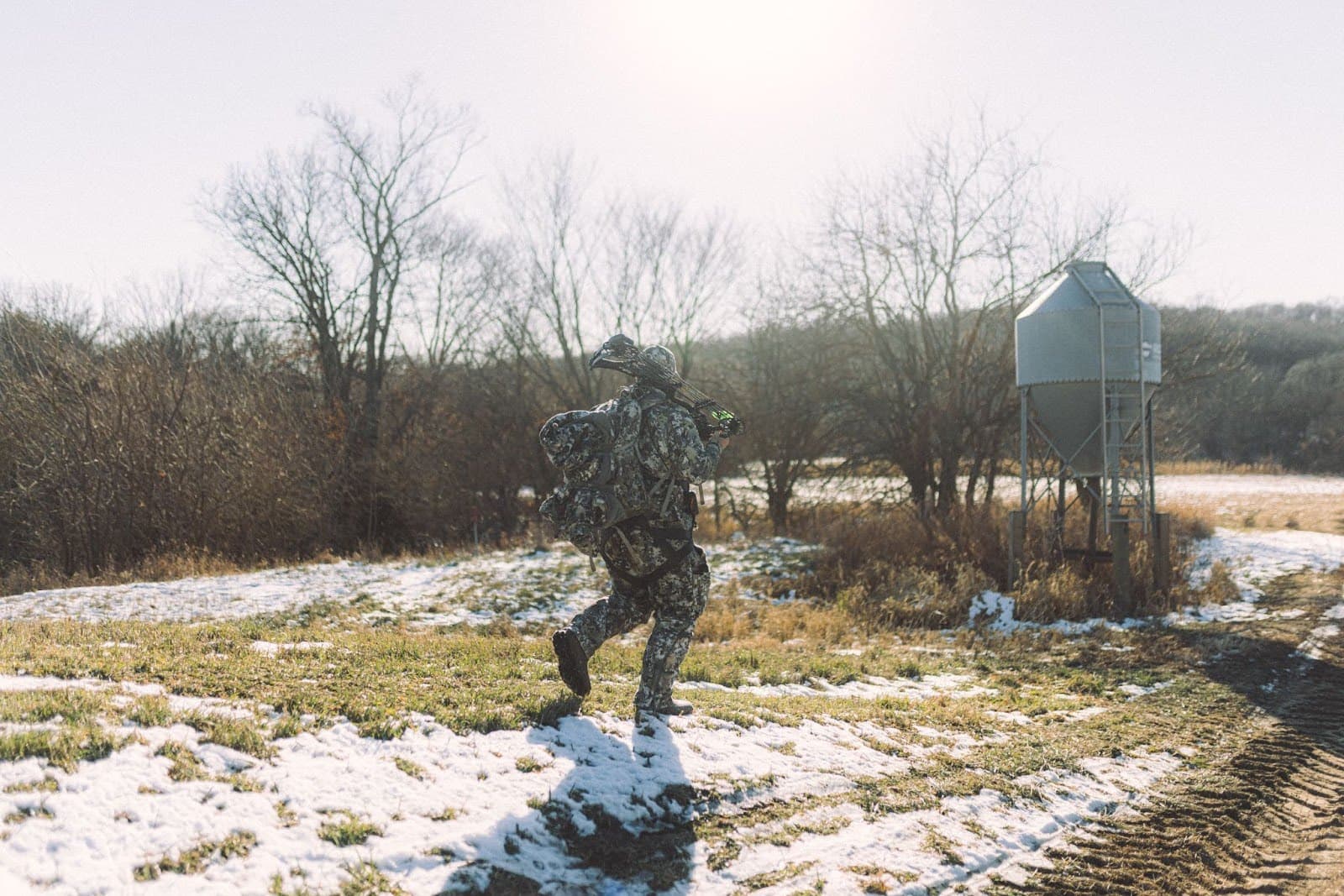
Heading home with bow and pack in tow.
How SITKA Gear Elevates Your Scent Control Strategy
Successful whitetail hunts start with the right gear -SITKA is here to help.
Our scent control clothing for deer hunting is built around three principles:
Minimize scents – We use merino wool blends in many of our products. Since merino wool can neutralize odors, these blends help hunters hide their scents.
Boost breathability – By creating your own custom layering system, you can make your hunting ensembles more breathable and kick sweat (and, therefore BO) in the field.
Withstand the weather – Many items in our collection are waterproof or water-resistant; we’re here to help you brave the elements.
With help from SITKA Gear, you can control more variables (like scent), dress for conditions appropriately, and build a collection of hunting clothes that’s built to last.
Gear Recommendations for Scent-Conscious Hunters
Looking to minimize scent in the field? Check out our top odor-mitigating products:
These breathable, quiet, durable, and weather-friendly hunting clothes will help you mitigate scent while you chase your next trophy whitetail.
Level Up Your Whitetail Hunt With SITKA Gear
If you’re a stickler about deer hunting scent control, you can’t go wrong with SITKA Gear’s collection of merino-blended, breathable deer hunting clothes. We stand behind every product we make -hunters choose us for our undeniable quality and durability.
Sources & further reading
Deer hunting tips - scent control is the tip of the iceberg
North American Whitetail. The Science Behind a Deer’s Sense of Smell & Scent Control.
Oransi. Air Purifiers and Ozone Generators: What You Need to Know.
Outside Magazine. How Long Can You Really Wear a Wool Shirt Before It Stinks?.

Joe Fields
Joe Fields represents the mindset behind the SITKA community — disciplined, prepared, and shaped by time spent in wild places.