Keeping Wyoming Wild: Red Desert Mule Deer Migration
Category
Conservation
Read time
9 min
Last updated
Jun 2, 2026
That mule deer in your yard might be 250 miles away by winter. This herd set one of the longest migrations on record.

Across the open country of Wyoming, stewardship and culture not only sustain migration, but the very ground it depends on. What began in 2011 as a study of what was thought to be a resident herd of mule deer outside of Superior, WY turned into something much bigger - a discovery of one of the longest mule deer migrations on record.
This kicked off a long-term effort to understand how these herds move, why different migration strategies can exist within the same herd and what it takes to keep those routes intact.
We sat down with Luke Wilde, a PhD candidate in the Kauffman Lab in the Wyoming Migration Initiative (WMI), to talk about how migration is shaped by the landscape, and how, in turn, it defines that very same landscape itself.
Luke Chanced Upon His Mule Deer Fascination
Q: Was there a defining moment that inspired you to focus your research on mule deer migrations in the state of Wyoming?
A: Right out of college, I took an outdoor education job in Yellowstone to teach middle school classes in the park. But I just couldn't turn off my research mind. When the park asked us to collect samples from a specific deer, it was all I could focus on.
At some point, I ended up coming across some research that came out of a project we were working on related to Bison. It was found that when bison graze a landscape, the land becomes more productive, proving that migratory ungulates have a feedback of being crucial for the landscapes.
So, I sort of stumbled into my interest of mule deer, but have found myself completely fascinated by them and their connection to the landscape.
Building A Longitudinal Picture Of Mule Deer Migrations
Q: What does studying mule deer migrations look like for this project, especially when multiple migrations coexist in a single population?
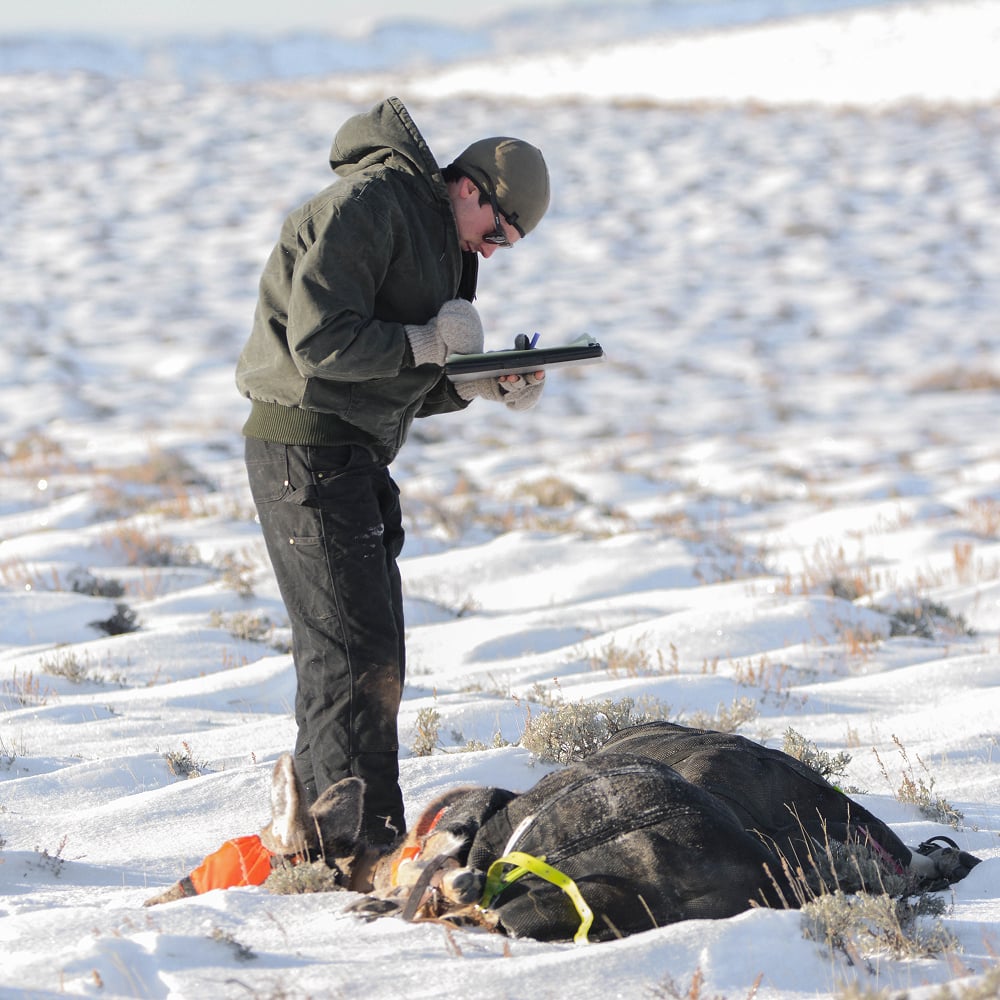
A: We put out collars in a systematic way, so that we maintain about a third of the long-distance migrants, a third of the mediums and a third of the short. Because there are more migrants than there are residents, this tells a story that migration matters.
From each migration we choose 20 deer, 60 total, to monitor every March and December. Unlike a lot of other data sets, not only is this long-term, it's longitudinal - allowing us to have a full picture of what the animal's life is.
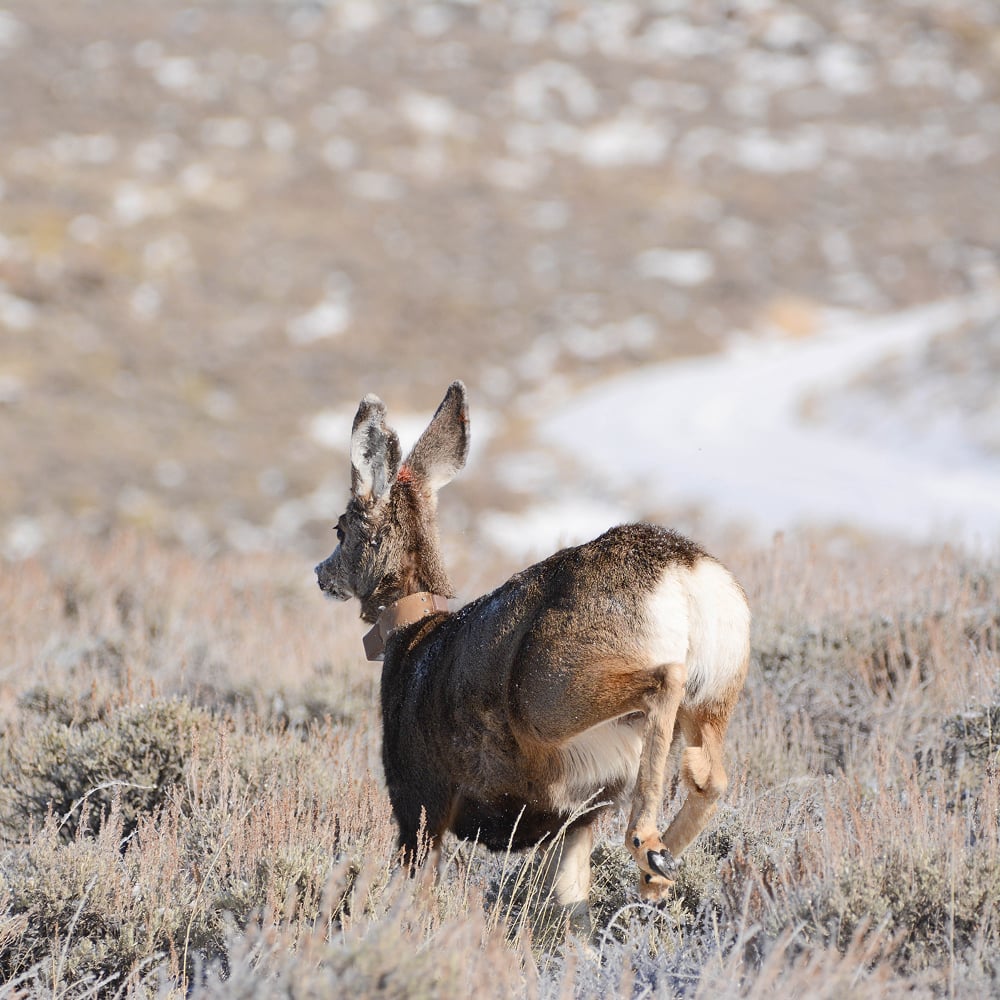
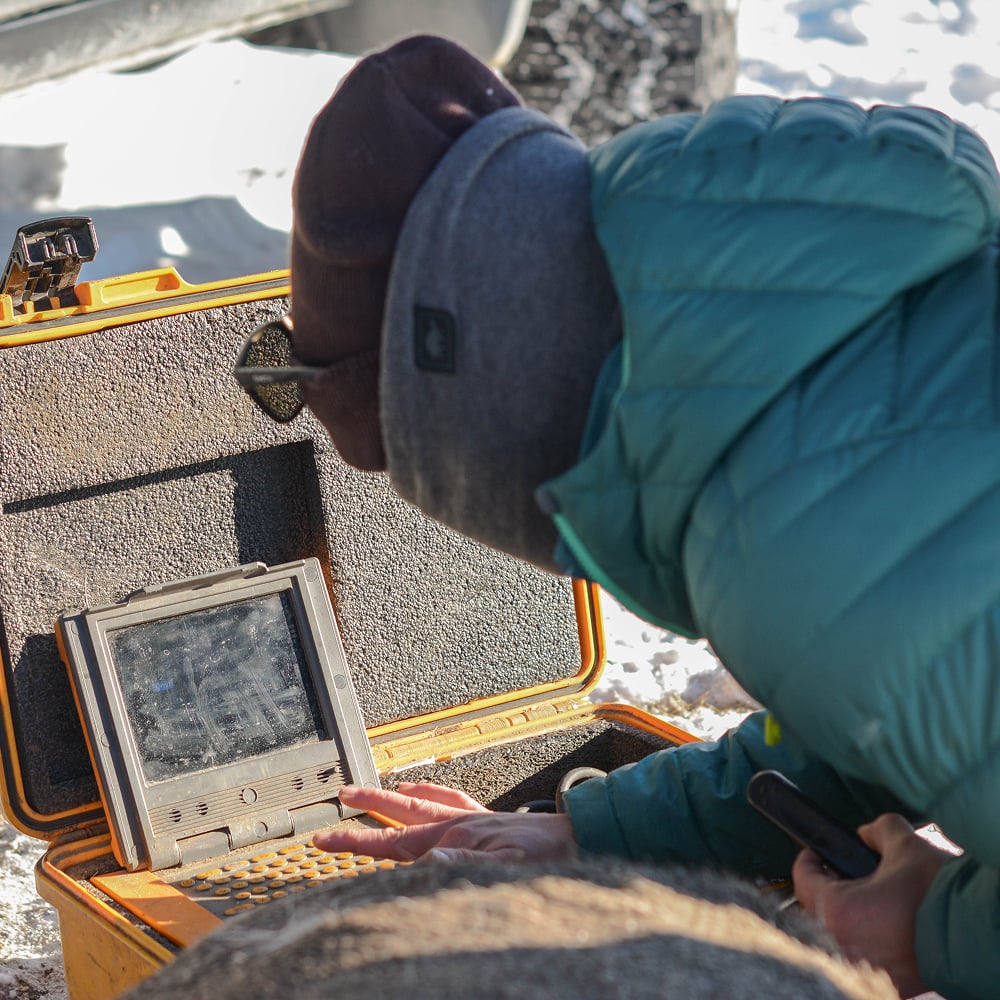
When we’re actively collecting the data, the GPS takes a 2-hour location, while also collecting factors like the amount of fat the deer has, whether she's pregnant, their age and who they're related to. Then we release them - they instantly hop off the mat, and become a wild deer in the rugged landscape again.
How The Deer Are Attuned To The Land
Q: Have you discovered anything in migration science that has surprised you either out in the field or when analyzing data?
A: What I find most interesting about migration is the extent to which the landscape shapes how these animals live - and even how their bodies develop. Every plant that she nibbles on, what she puts into her fawns, all of that is coming from the landscape.
It’s amazing to see just how much their body has the ability to tune to the landscape they live in. It proves how crucial their relationship is to migration, and not only does it fuel these herds, it’s the reason that the West is able to be defined by these populations.
But when that process of learning is disrupted, if they lose that information, it's gone and it’s hard for them to get it back.
Tough Winters & Hot Summers Mean Relying On The Local Community
Q: What sort of challenges have you faced with your research, especially since it is field-based? How were you able to overcome these?
A: Out here, it’s the weather. The winters are hard, and the summers are hot.
We’ve had plenty of times where we can't fly the helicopter to do captures or even get into the field.
We’ve only been able to overcome it with the help of the community. Local road crews have plowed roads for us and other partners have helped us when we’ve gotten stuck. Without the community, we wouldn't be able to do it due to how demanding the landscape can be.
The people around us have been the biggest asset for doing the work.
Shared Reciprocity Keeps Migrations Moving
Q: Are there any common misconceptions that people have about game migrations, or even the current threat to migrations?
A: Sometimes I think we have it in our minds that there's some sort of permanence to migrations, but really, we're getting in the way. Migrations don't just happen, and it doesn’t always come easy to these animals.
That same deer that you see munching on your lawn in the summer might be 250 miles away come winter, potentially crossing hundreds of other herds and barriers that humans have put on the landscape. The awesome part of this effort to map migrations that WMI has done is once we map it, we can identify where the problems are.
Private landowners have been some of the biggest advocates for wildlife. The working landscapes are not only where they make their livelihood, but also where the deer earn theirs. It's this shared reciprocity that has been key to keeping migrations going.
Migration Maintains Stable Herds
Q: What aspect of this Red Desert Mule Deer Migrations project do you believe is the most integral?
A: By far the coolest and most unique data we have found was for fat cycling and reproduction. We're learning so much about how migration can lead to building fat in these animals, which fuels the whole system, including reproduction ability.
Migrations are the engine of these herds, and really only by migrating in these types of landscapes, where it's desert up into the foothills, deer are able to produce enough fawns to have a growing population. This is critical to maintaining population stability throughout the hard shifts in season.
Fellow collaborators have helped us with this data collection, and it truly tells a story of how mule deer can tune their bodies to the landscape.
Mule Deer Migrations Need Active Stewardship
Q: Do you think the success of this project could be advanced with any help from other branches of the scientific research community, other conservation partners or even the general public? What could this look like?
A: These migrations don't just happen - they need our active stewardship.
Right now, it’s crucial to vote for protecting wild lands, protecting public lands and keeping these spaces open.
These deer need space, and if we decide as a culture that we care about having deer, it earns us that space, too.
Mule Deer Hunters Play An Important Part
Q: What conservation ethics do you think were/are inherent to this project?
A: For projects like this, a range of conservation ethics come into play. Having a relationship with these animals - relying on them to feed your family and recognizing their value - is where these ethics come in.
Wyoming has been a success story about throwing its weight behind that. There's no better steward of the land than the mule deer hunters and ranchers who need the landscape to be functioning.
The role of hunting and the culture it brings is a very important part of how the people of Wyoming understand themselves.
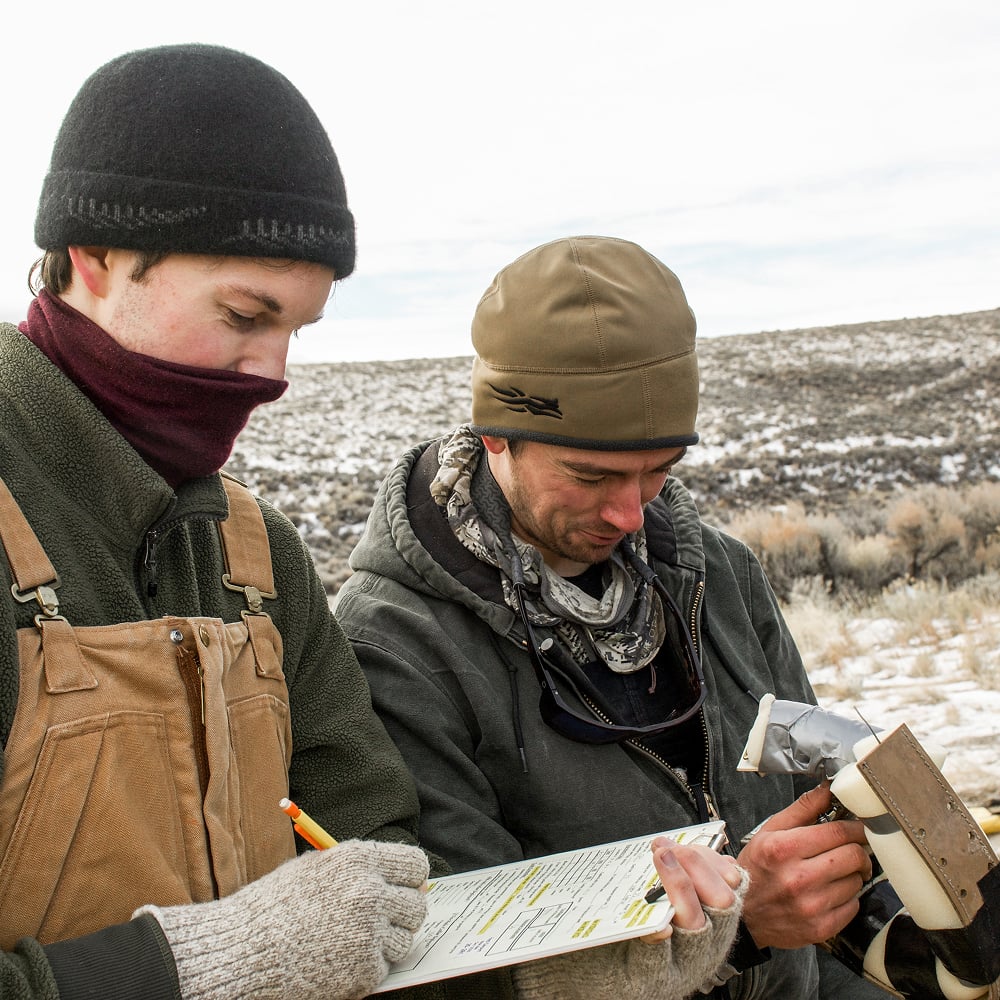
SITKA, Safari Club International and the Nature Conservancy have all been part of this conservation ethic, as have the Muley Fanatic and Mule Deer Foundation. These guys’ volunteers even join deer captures, and it's so fun to see them light up when they see the animals.
Migration Prevails, Despite Modern Disruption
Q: What do you believe will be the most prominent lasting benefit of this migration work?
A: It's the magic that migrants bring to the world. Even with technological advances, we are still shocked by what animals are capable of doing right under our noses.
The world's longest mule deer migration, among the longest in the world of any walking animal, has been going on in a place that has had humans for a long time, and yet it surprised everyone.
Migration work like this leaves us with a lasting reminder that the places we call home are still wild and rugged.
In Wyoming, The Land Lives & Breathes
Q: Have you experienced any advocacy challenges when it has come to advancing migration research in the area?
A: Honestly, we’ve seen a lot of genuine interest.
There's a sense in Wyoming that the land is still very much alive, and that isn't how it is everywhere. People who work and live in Wyoming have that sense, and it's a refreshing place to be doing research like this, because people want to keep it living.
Learning More Helps Protect The Wyoming Mule Deer
Q: What do you anticipate for the future of this migration study? What about the future of Red Desert Mule Deer migration in general for the area?
A: I have a lot of belief and optimism that migration in Wyoming will continue to be a priority; something that the people care about, and the lawmakers care about and continue to try to advance.
For the Red Desert migration, it’s my hope that outreach and storytelling keeps it top of mind, to make it so that people remember there is wildness out there.
I think we're just going to learn even more about not only how it works, but how it gives back to us.
In the state of Wyoming, migration is crucial to defining the culture of the wild landscape. Follow along with the migration initiative.
About The Contributor
Luke Wilde works closely with the Wyoming Migration Initiative and the Global Initiative on Ungulate Migration. Passionate about forecasting scenarios and improving conservation plans, Luke supports early education programs in Wyoming and the West.
See Also
Article Contents
Where to hunt mule deer in Wyoming?
You can hunt mule deer across Wyoming with the proper tags. There are over 30 million acres of public hunting land with mule deer in Wyoming.
How many preference points for Wyoming mule deer?
To draw a Wyoming mule deer tag as an out-of-state hunter, you’ll likely need 10+ preference points. However, it is possible to draw a mule deer tag with fewer.
Where is the best mule deer hunting in Wyoming?
The best mule deer hunting in Wyoming is in the western and central areas of The Equality State.
How to hunt mule deer in Wyoming?
To hunt mule deer in Wyoming, as a non-resident, you’ll have to draw a tag through the state’s limited-quota draw system
When is mule deer season in Wyoming?
Mule deer season in Wyoming varies by hunting unit; however, archery season is generally September 1st-30th, and rifle season begins in October.
When is the mule deer rut in Wyoming?
The mule deer rut in Wyoming is usually in November or early December.
How many mule deer are in Wyoming?
Wyoming’s most recent estimated mule deer population is 200,000- 215,000. Mule deer numbers vary drastically by unit.

Stay Connected
Join our community.
Get the latest gear innovations, SITKA films, expert insights, and more delivered to your inbox.
By providing your email and clicking "Sign Up", you agree to receive marketing emails from SITKA GEAR. You can unsubscribe at any time by clicking the link in any email. For more details, see our Privacy Notice and Terms & Conditions