Hunting Whitetail vs Mule Deer: How to Tell Them Apart
Category
Tips & Tactics
Read time
5 min
Last updated
Jan 27, 2026
Basket antlers or candelabra? Learn the ear, tail, and gait differences that ID a buck before you pull the trigger.

When you’re staring through your glass at a buck several hundred yards away, the difference between a whitetail and a mule deer isn't always immediately obvious. However, for hunters, the ability to make a quick and accurate identification is more than just a matter of curiosity—it’s a legal necessity and a tactical advantage.
Whether you’re hunting the river bottoms of the Midwest or the high-alpine basins of the Rockies, understanding the nuances of whitetail vs mule deer will ensure you’re making ethical shots and staying compliant with your tags.
Antler Differences
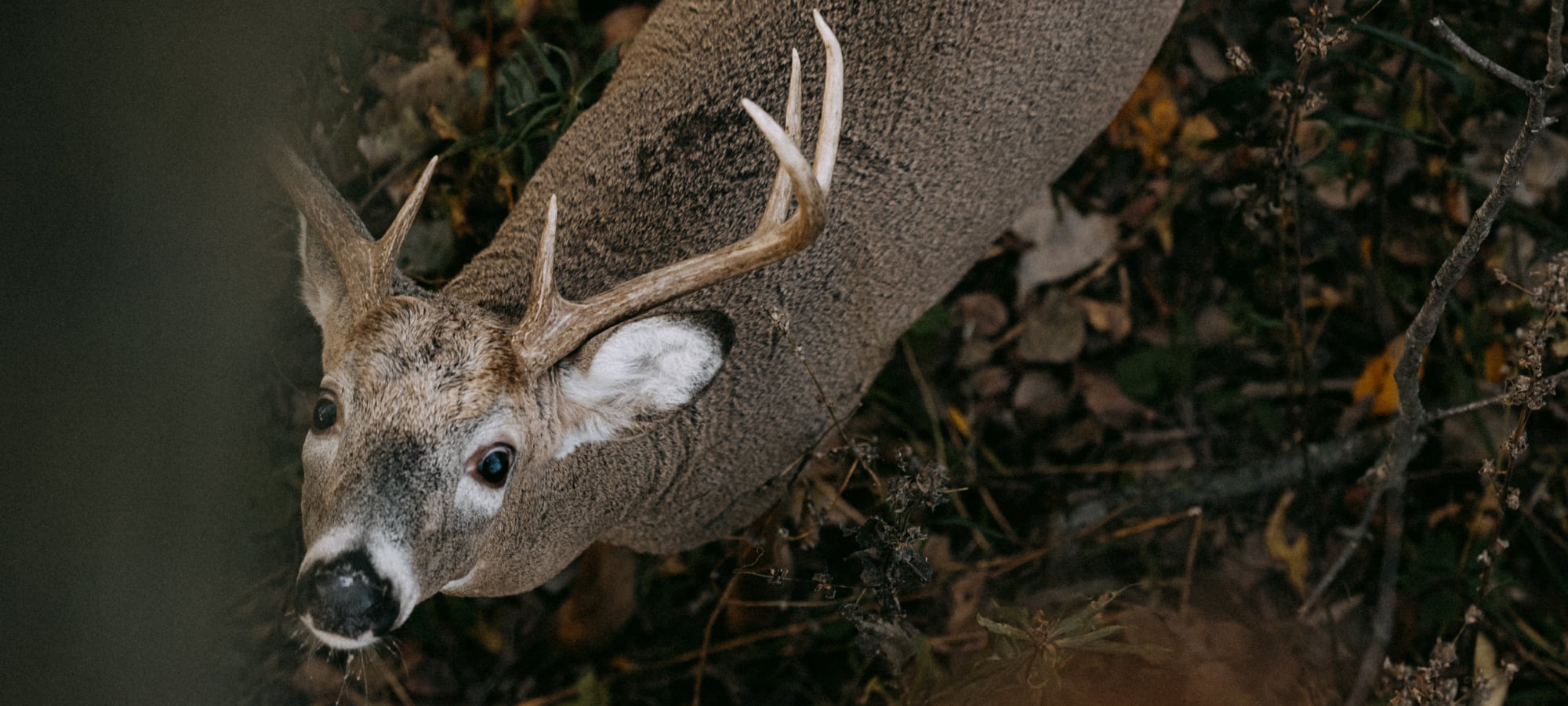
While antlers are often the first thing a hunter looks at, they can be one of the trickiest ways to identify a species, especially with younger deer. However, mature bucks have distinct "architecture" that gives them away.
Whitetail Deer Antlers
Whitetail antlers are characterized by a single main beam. From this beam, all individual tines (points) grow upward vertically. This typically creates a more symmetrical, "basket-like" appearance. Whitetails also tend to have more prominent and longer brow tines compared to their western cousins.
Mule Deer Antlers
Mule deer antlers are bifurcated, meaning they fork and then fork again. Rather than points growing off a single beam, the beam itself splits into a "Y" shape, and each side of that "Y" can split again. This results in a wider, more sprawling "candelabra" shape. Mule deer often have very small brow tines or may lack them entirely.
Physical Characteristics
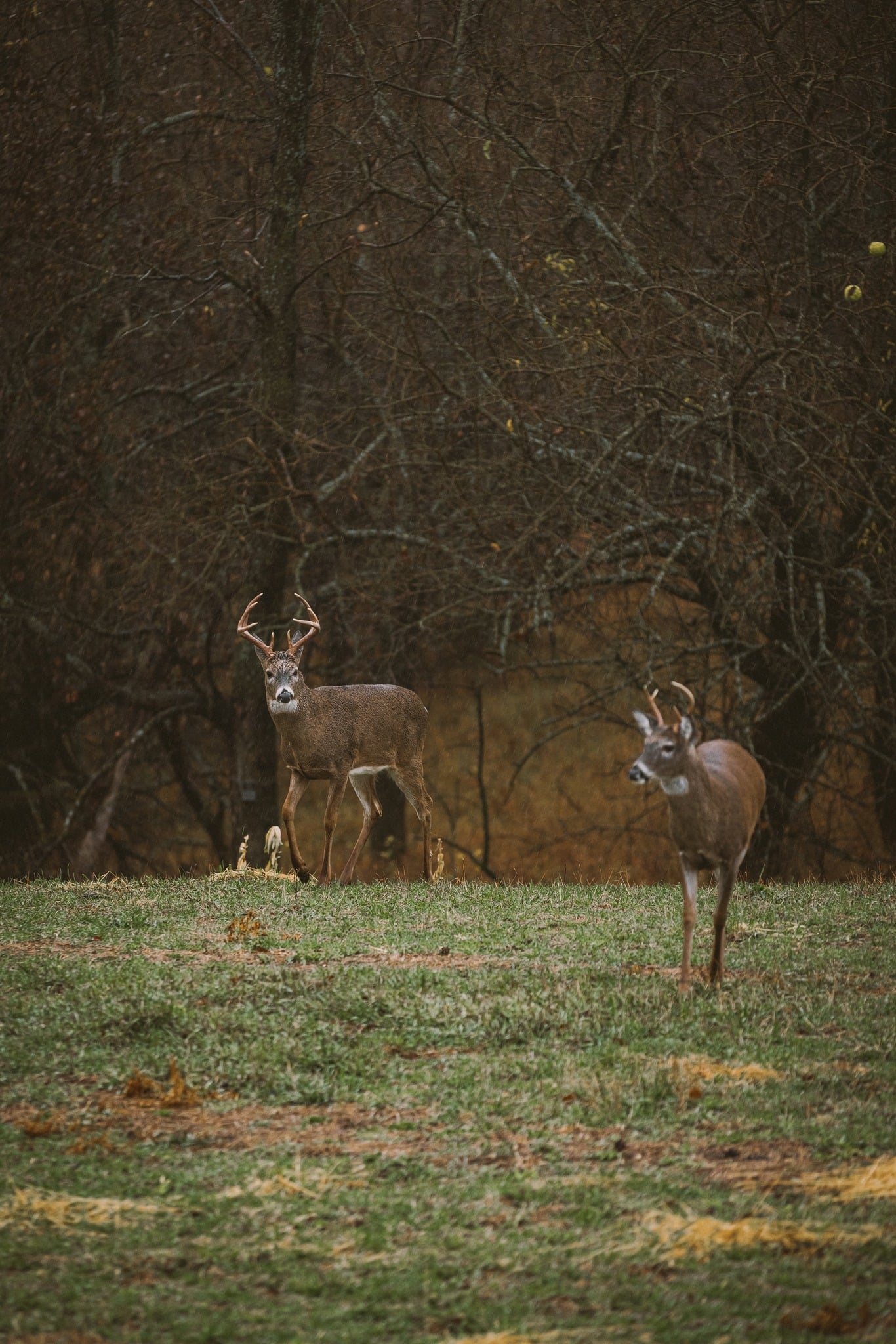
Beyond the headgear, the body offers several "tells" that help you distinguish these two species even when they aren't wearing racks.
Ears and Heads
The most famous difference is the namesake feature of the mule deer.
Mule Deer: They have large, oversized ears—often up to three-quarters the length of their head. Their faces are primarily white or light gray, often with a distinctive dark "black mask" on the forehead.
Whitetail Deer: Their ears are smaller, more erect, and proportionate to their head. A whitetail’s face is mostly brown with characteristic white rings around the eyes and nose.
Tail and Rump
If the deer is walking away, the tail and rump are the most reliable indicators.
Mule Deer: They feature a large white rump patch that is visible even when the tail is down. The tail itself is thin and rope-like, white in color, but with a distinct black tip.
Whitetail Deer: They have a brown rump. Their tail is broad and bushy with a brown top. However, when alarmed, they "flag"—lifting the tail to reveal a bright, snow-white underside as a warning to other deer.
Size and Body Structure
The build of the animal often reflects the environment it has evolved to navigate.
Body Size Comparison
Generally speaking, mule deer are the larger of the two species. A mature mule deer buck can weigh between 200 and 400 pounds, appearing "blockier" and taller. Whitetails are typically leaner, with mature bucks averaging 150 to 300 pounds. In the summer, whitetails have a sleek, reddish-brown coat, while mule deer tend to look more grayish-brown or tan year-round.
Running and Movement
Perhaps the most unmistakable difference is how they flee from danger.
The Gallop (Whitetail): Whitetails are built for speed in thick cover. They run with a classic horse-like gallop, often leaping over obstacles with a fluid, graceful motion.
The Stott (Mule Deer): Mule deer use a unique movement called stotting (or pronking). They bound with all four feet hitting and leaving the ground simultaneously. This pogo-stick motion is highly efficient for escaping predators in steep, rocky, or uneven terrain.
Behavioral and Habitat Differences
Where you find them often dictates how you hunt them.
Habitat Preferences
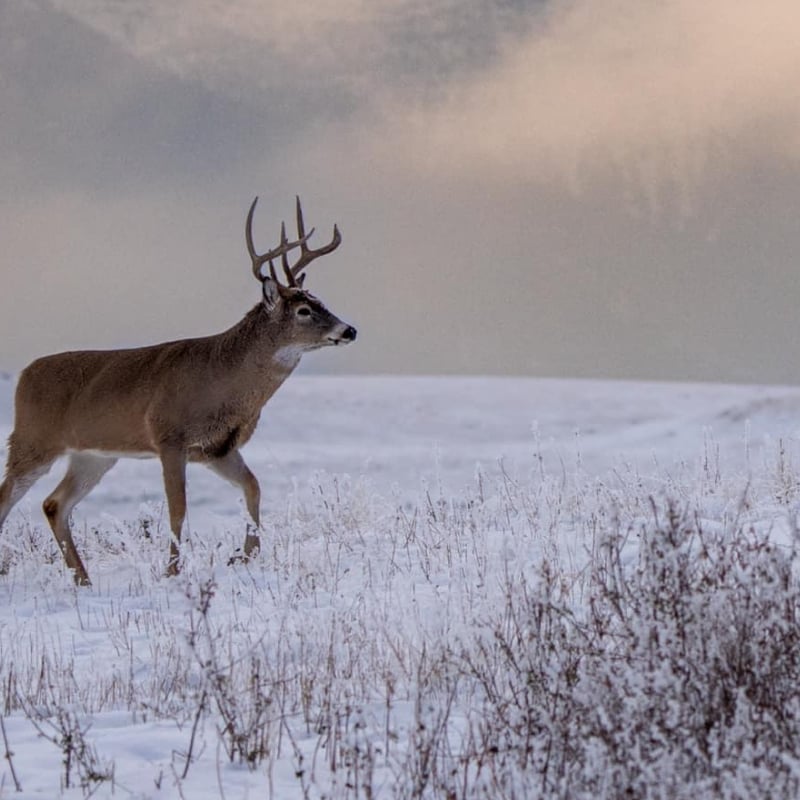
Whitetails are the ultimate generalists but prefer dense cover. You’ll find them in wooded lots, riparian corridors, and agricultural edges where they can quickly disappear into thickets.
Mule Deer are at home in open country. They thrive in the arid West, frequenting high-altitude alpine basins above the treetreeline in summer and migrating down to sagebrush flats in the winter. While their ranges do overlap in the Great Plains and foothills, mule deer generally prefer "big" country with long lines of sight.
Behavioral Traits
Whitetails are notoriously jittery and sensitive to pressure; they will often bolt at the first sign of a human. Mule deer, while still cautious, are sometimes more curious. They have a famous habit of stotting a short distance away and then stopping to look back at the source of the disturbance—a habit that has been the undoing of many bucks.
Enhance Your Hunting Experience with SITKA Gear
Success in the field starts with accurate identification, but it’s sustained by staying focused and comfortable in the elements. Whether you are hunting mule deer or whitetail, your gear needs to match the environment.
If you’re sitting in a treestand during the late-season rut, the Fanatic Series is designed for dead-silent warmth and features our signature OPTIFADE™ Elevated II pattern to disappear into the forest canopy. Conversely, if you’re glassing from a windswept ridge in the Rockies looking for mule deer, the Jetstream Jacket and Timberline Pants provide the wind protection and mobility you need. Our OPTIFADE™ Open Country pattern is specifically engineered to break up your silhouette in rocky, sparse terrain.
Understanding the difference between whitetail vs mule deer is only the first step. Equipping yourself with a system designed for your specific pursuit ensures that when that buck finally steps into the clear, you're ready to make the moment count.
Explore the SITKA Gear Whitetail and Big Game Collections today.

Stay Connected
Join our community.
Get the latest gear innovations, SITKA films, expert insights, and more delivered to your inbox.
By providing your email and clicking "Sign Up", you agree to receive marketing emails from SITKA GEAR. You can unsubscribe at any time by clicking the link in any email. For more details, see our Privacy Notice and Terms & Conditions