David Halloran's Turkey Hunting Gear System
Category
Gear Talk
Read time
7 min
Last updated
Sep 27, 2026
Turkey hunting essentials from David Halloran, pro turkey caller: the camo, layers, and supplies in his cross-country turkey system.

Few people have spent more time scratching on a turkey call than David Halloran. He's a lifelong turkey hunter, meticulous call maker, and the founder of David Halloran Turkey Calls. After years of chasing public-land gobblers in some of the toughest environments in America, David has developed a system that allows him to be a successful turkey hunter. Keep reading to learn turkey hunting basics from a true master.
Key takeaways:
The best turkey hunting gear system adapts to changing conditions. David Halloran’s spring turkey hunting essentials center on versatile layers and equipment that perform across ever-changing temperatures, terrain, and weather.
Core layers provide the foundation for spring turkey hunting. Halloran relies on the Core Merino 120 Series for lightweight warmth on cool mornings and comfort as temperatures rise during active hunts.
Turkey hunting equipment should match the conditions. Halloran’s system includes the Equinox Guard Hoodie and Pant for breathable bug protection, plus the Jetstream Jacket and Timberline Pant for cold weather and demanding terrain.
Wind changes how you hunt turkeys. Hunting turkeys in the wind requires adjustments because strong wind reduces hearing for both hunters and turkeys. Halloran recommends changing how often and how loudly you call in windy conditions.
Organized turkey hunting supplies keep essential gear within reach. Halloran uses the Equinox Turkey Vest to organize turkey calls, strikers, optics, maintenance supplies, gloves, and other turkey hunting basics for quick, quiet access in the field.
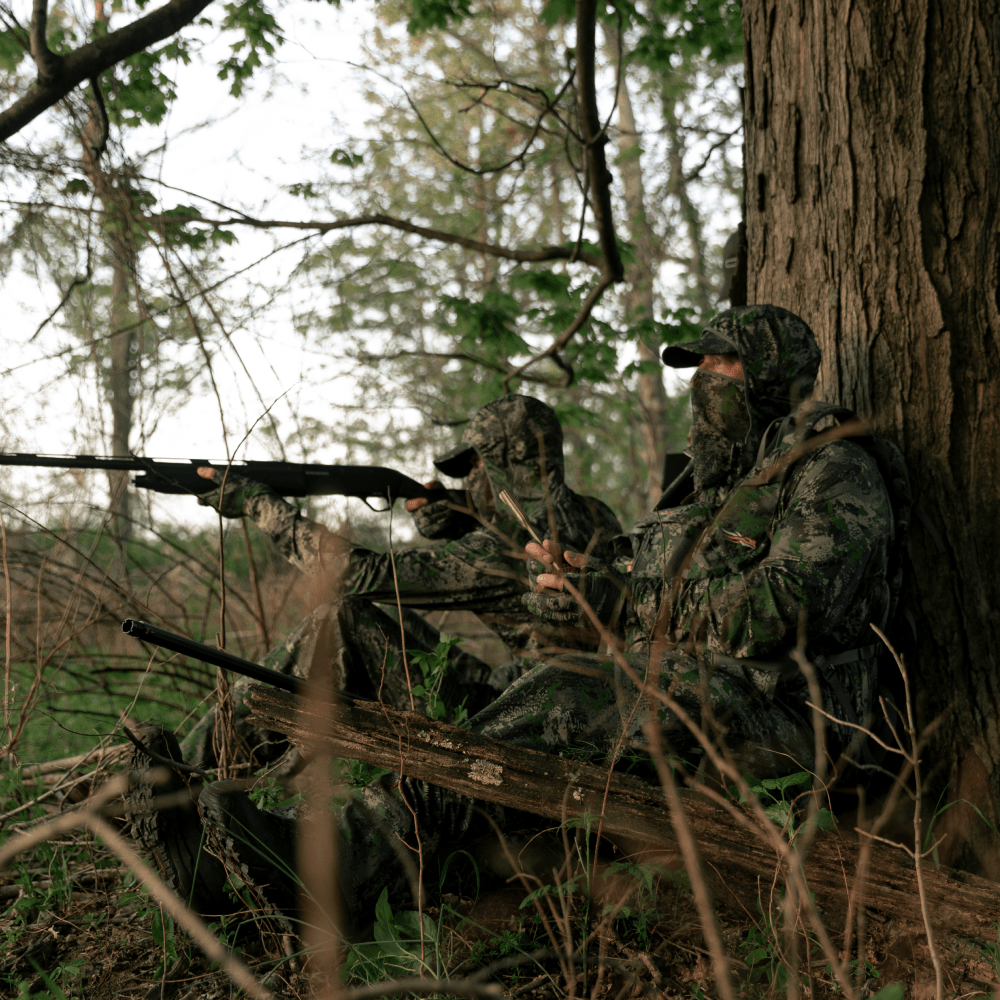
Two hunters sit under a tree wearing full camo. One aims, preparing for the shot.
I’m fortunate enough to have chased turkeys all across the country and, over time, I’ve dialed in a system that keeps me comfortable through the entirety of a cross-country turkey trek. The gear outlined below adapts to all the environments and weather patterns you’ll encounter.
Baselayers: An Early Spring Turkey Hunting Essential
Every good gear system needs a dependable foundation, and for me, it starts with the Core Merino 120 series. The 120 Series is light enough for active hunts as the day heats up while providing reliable warmth for brisk mornings. The Merino 120 series includes a long-sleeve crew and a hoodie. I lean towards the hoodie because it includes an integrated facemask for extra concealment and a center zipper that lets me get some extra airflow if needed.
Turkey Hunting Must-Haves: The 2x4 System
If you’re searching for all-encompassing staples, I’ve got two words for you: Equinox Guard. Tough yet breathable with built-in bug protection and a tightly-knit fabric that makes bites a non-factor, the Equinox Guard Hoodie and Pant are consistently in my lineup.
Turkey Hunting Equipment for Changing Terrain
When the mercury drops or I have brutal terrain slotted for the hunt ahead, I opt for the Jetstream Jacket and Timberline Pant. The Jetstream blocks wind and handles rugged terrain with ease, and the Timberline has waterproof panels and enough toughness for countless seasons of abuse.
Does Wind Affect Turkey Hunting?
Just because it’s windy doesn’t mean your hunt is over, but it does mean you’ll need to adjust your tactics and approach. To be successful while turkey hunting in the wind, you need to know that turkeys’ (and your) hearing is drastically reduced. Toms will gobble less frequently and more softly, so you’ll also need to adjust how often and how loudly you call.
When the winds are ripping, turkeys tend to move down into creek bottoms, valleys, and open fields, away from the high, exposed areas, so they can hear slightly better and see predators coming much better, rather than relying so much on their hearing.
Added Warmth In Cold Conditions
It's easy to get cold when hunts go stationary—that's when I pull out the Kelvin Aerolite Jacket. It’s super packable, and the synthetic insulation retains warmth even when dew or some light rain adds moisture to the mix.
Turkey Hunting In The Rain
Precipitation and spring turkey seasons go hand-in-hand, so I like to keep turkey rain gear close at hand. Rather than rely on the accuracy of the weatherman, I always keep the Dew Point Jacket and Pant in my kit. They’re easily packable and provide GORE-TEX waterproof protection in a durable package.
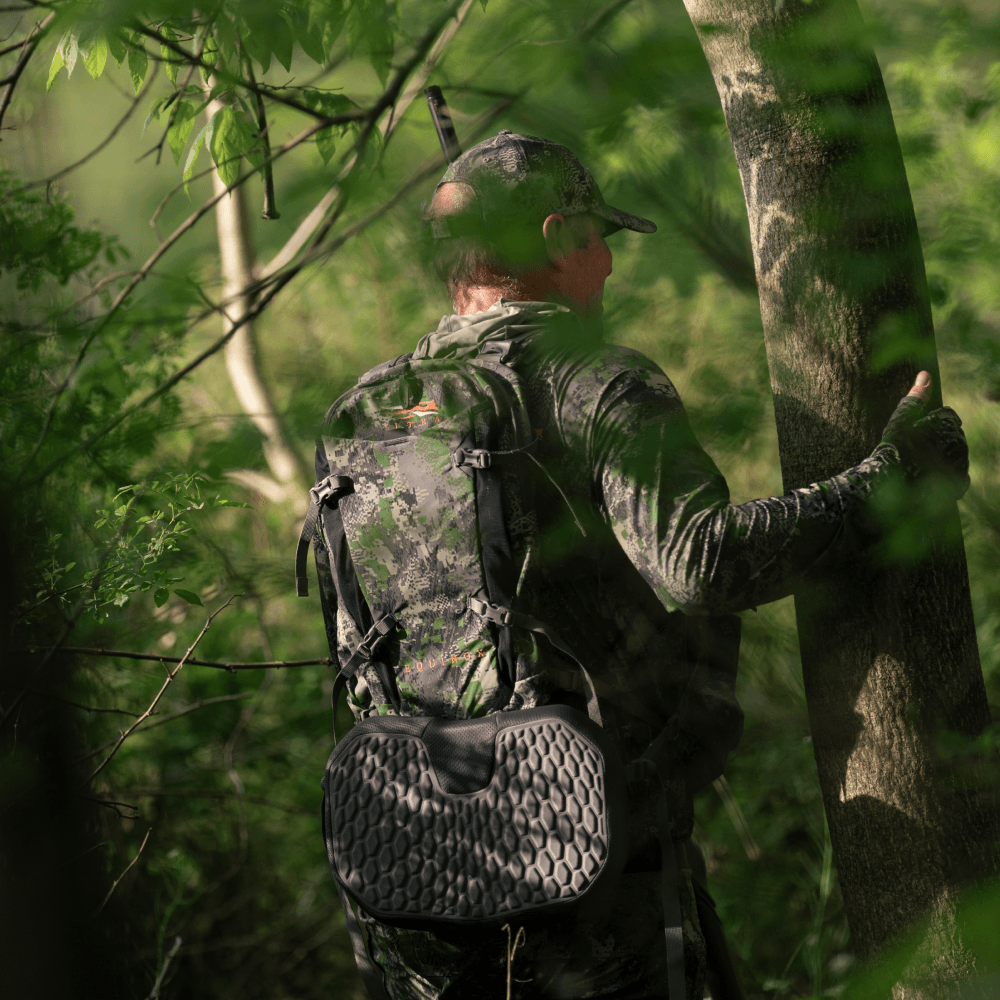
A hunter looks and listens for turkeys while carrying essential gear for the hunt.
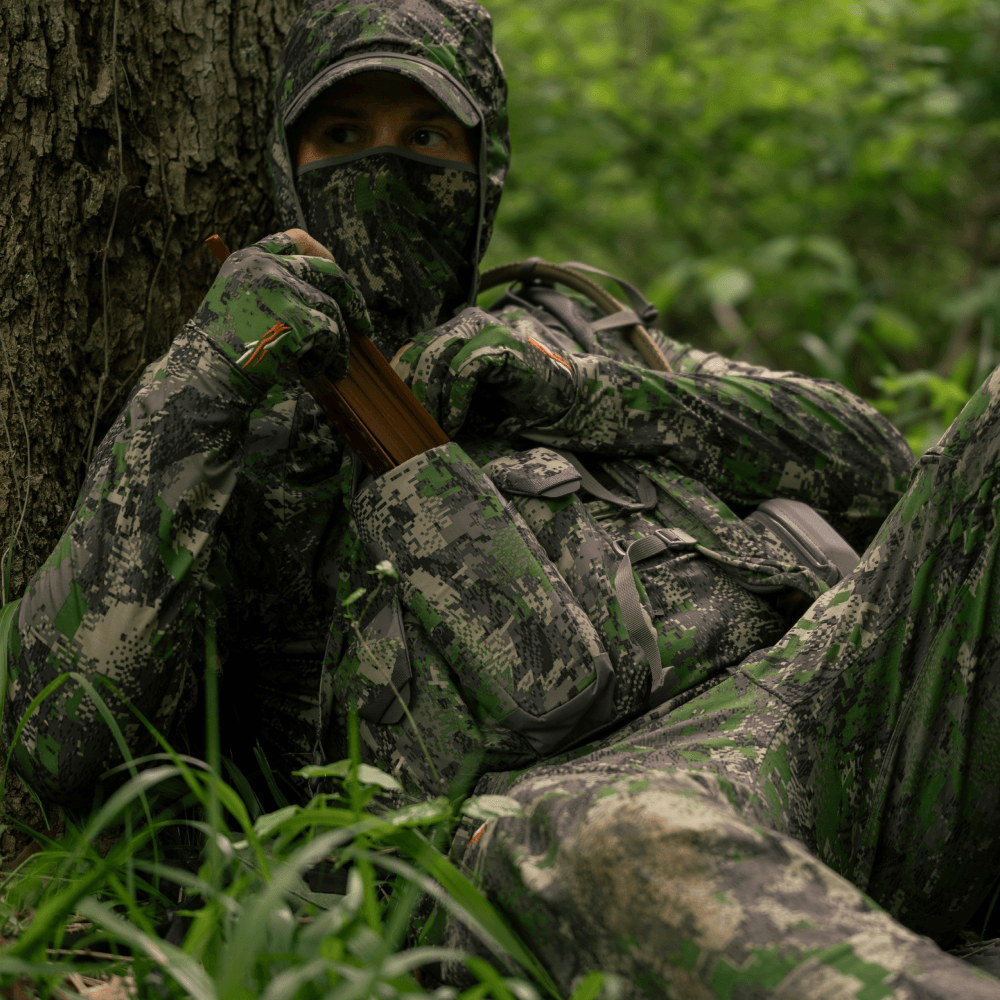
Why Camo & Concealment Matter For Turkey Hunting
Unlike deer, turkeys see the full color spectrum and UVA light. So, wearing camo while turkey hunting is essential to avoid being seen by their keen eyes. SITKA concealment systems break up your silhouette when the right camo pattern matches the terrain. Even while wearing camo, it’s critical to minimize your movements. Turkeys are great at noticing motion, so small, slow movements will help you spook fewer birds.
FAQs: Turkey Hunting Supplies & Advice For The Field
What is a Common Mistake Made By Beginner Turkey Hunters?
A common mistake made by beginner turkey hunters is moving too much. Having the patience to sit very still and wait for the turkeys to come to you will help you harvest more birds.
What's the Hardest Species of Turkey to Hunt?
Easterns are the hardest species of turkey to hunt because they’re heavily pressured, Toms rarely have to go far to find a hen, and they’re quieter when gobbling. A very close second is the Osceola because it’s only found in Florida.
What Not to Do While Turkey Hunting?
When turkey hunting, do not wear solid colors like red, white, black, or blue. Stalking turkeys is also very difficult because they instantly pick up on movement. Lastly, avoid over-calling or making too much noise while turkey hunting because it sounds unnatural to the birds.
How Big Are a Turkey's Vitals?
A turkey’s vitals area is about 4 inches wide, or as big as a softball. The vitals themselves are much smaller. The heart is only about 2 inches wide.
Where to Shoot a Turkey with a Broadhead?
To shoot a turkey with a broadhead, aim where the head and neck meet when it’s facing you or at the triangle of feathers formed where the upper and lower wing meet when it’s broadside.
Is 4 or 5 shot Better for Turkey Hunting?
4 shot is better for turkey hunting when you know the turkeys are bigger or won’t get as close (40 to 50 yards) because the pellets are larger and carry more energy at farther distances. 5 shot is better for turkey hunting when you can get a little closer (<40 yards) and need more pellets on target.
What to Do After You Shoot a Turkey?
After you shoot a turkey, tag it according to your local laws, butcher it (if you don’t plan to mount it), and cool the meat quickly. If you plan to mount it, get it in a cooler ASAP and call your taxidermist to ask how they want you to preserve it.
Will Turkeys Come Back After Being Shot At?
Yes, turkeys will come back after being shot at because they’re creatures of habit, but it’s usually hours or days later. Don’t expect them to immediately come back if you start calling right away.
Sources & Further Reading

Stay Connected
Join our community.
Get the latest gear innovations, SITKA films, expert insights, and more delivered to your inbox.
By providing your email and clicking "Sign Up", you agree to receive marketing emails from SITKA GEAR. You can unsubscribe at any time by clicking the link in any email. For more details, see our Privacy Notice and Terms & Conditions