How To Build A Hunting Clothing System: 8-Layer Guide
Author
SITKA Editorial Team
Category
Gear Talk
Read time
10 min
Last updated
Jun 1, 2026
Find out the 8 pieces of gear that can handle any hunt, from desert heat to alpine blizzards.

A bad weather day in the backcountry is not the time to find out your hunting clothing system doesn't perform. Dynamic mountain weather, remote locations and multi-day physical demands are unforgiving - and randomly stacking layers on top of one another isn't a system. It's a gamble.
John Barklow has spent 24 years developing technical clothing for SITKA Gear and the US military. His conclusion: you only need 8 pieces to build a truly capable hunting layering system - one that manages moisture, regulates body temperature and protects you from the elements during any season, on any pursuit.
This guide breaks down every layer in Senior Product Manager John Barlow’s 8-piece system, what each one does, how they work together and how to customize your build for your specific conditions.
Why A Hunting Clothing System Matters
There's a difference between buying and wearing hunting clothes and running a hunting clothing system. A system is designed so that every layer has a defined role - and when assembled correctly, they work together as a single, holistic unit.
According to Barklow, every layer in a complete hunting clothing system contributes to at least one of three things:
Managing moisture - either from the inside out (sweat) or outside in (rain, snow)
Maintaining thermal regulation - dumping heat when you're active, capturing it when you're static
Protection from the elements - wind, rain, snow, abrasion from rocks and vegetation
When those three functions are covered across your full system, you stay comfortable, focused, and safe - regardless of what the mountain throws at you.
The 8-Piece SITKA Layering System
The complete hunting layering system consists of:
Base layer top
Base layer bottom
Softshell pant
Active insulated top (midlayer)
Windstopper jacket
Static puffy jacket
Rain jacket
Rain pant
These 8 pieces, paired and sequenced correctly, cover the full range of conditions across North America - from desert heat to alpine blizzards. Here's what each one does and why it's in the system.
Key products: Core Lightweight Hoodie | Core Lightweight Bottom
The base layer is the foundation of every hunting clothing system. This layer helps manage body temperature year-round, no matter the season or weather. Its sole function is moisture management - pulling sweat away from your skin to keep you cool when you're active and dry when you stop.
Wear this layer as a stand-alone shirt in hot weather, then layer over the top as temperatures begin to plummet.
"I prefer something with a hood and long sleeves to provide as much skin contact as possible," says Barklow. "Whether I'm hiking a ridge or trudging through snow, a base layer contacting my skin is pulling that moisture off to keep me comfortable and focused."
On synthetic vs. merino wool: Synthetic base layers dry faster and are Barklow's preference for active hunts. Merino wool dries slower but it manages odour exceptionally well - making it the better choice for hanging out at the camp with your buddies on longer trips or any whitetail hunting where scent control is critical.
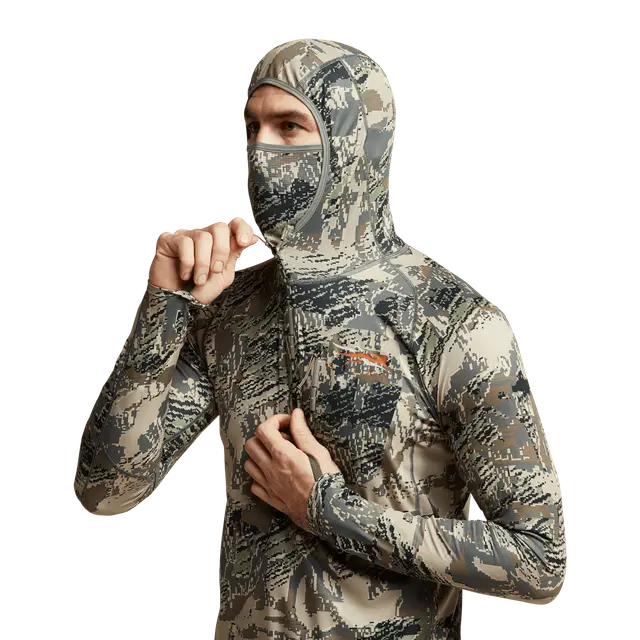
Core Lightweight Hoodie
A perfect foundation to any system.
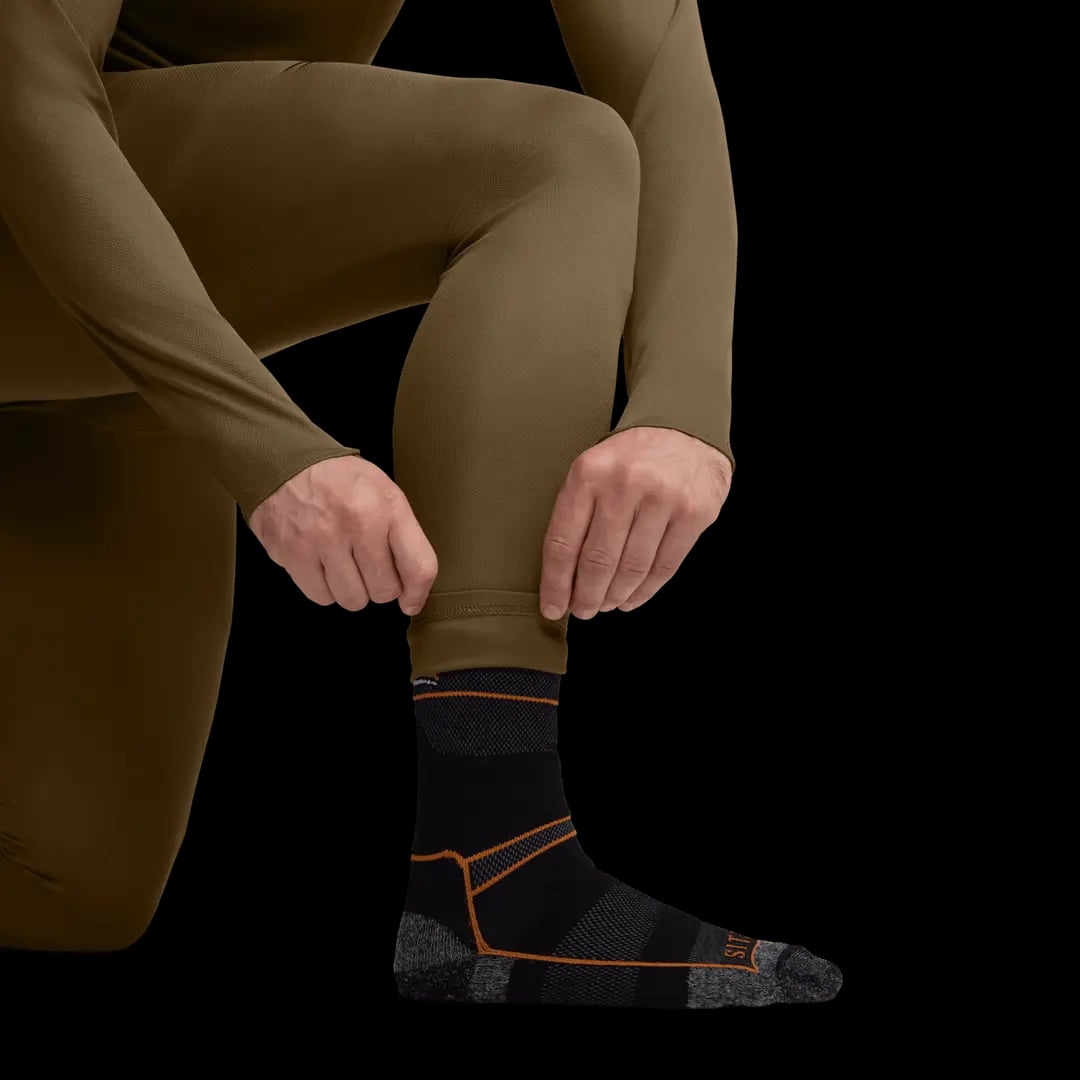
Core Lightweight Bottom
Rapid moisture-wicking for next-to-skin comfort.
Layer 3 - Softshell Pant: Protection on the Move
Key product: Ascent Pant
A softshell hunting pant is your first line of defense against abrasion and light weather. Whatever pair you choose, Barklow is clear on the non-negotiables: it must provide protection, and it must have a DWR (Durable Water Repellent) finish to shed rain and snow and dry quickly in the field.
Material-wise, polyester or nylon - or a blend with some wool content - are solid picks. Beyond that, it comes down to personal preference: cargo pockets, removable knee pads, and quiet fabric vs. maximum durability.
Our Ascent Pant is lightweight and breathable and will keep you cool and dry for those hot days charging in the mountains. Advanced 4-way stretch synthetic blend moves with the hunter and stands up to heavy abrasion in the scrub and scree. Mesh-backed pockets deliver extra ventilation, and an internal mesh knee pad pocket provides added protection when field dressing an animal.
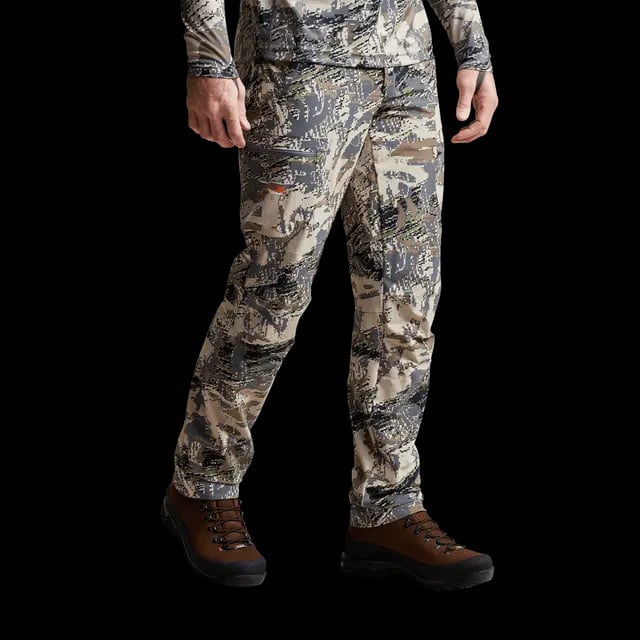
Ascent Pant
Lightweight, breathable protection that moves with you.
Layer 4 - Active Insulated Midlayer: The Hybrid
Key product: Ambient 100 Hooded Jacket
This is what Barklow calls hybrid active insulation - the most adaptable piece in the hunting layering system. The intent is to provide breathability with insulation while you're moving, be that setting up decoys in the pre-dawn dark or going on a stalk.
"You need to stay warm but not overheat," says Barklow. "This piece seamlessly transitions from outerwear when you're working hard to a midlayer when you put a shell over it. It’s very adaptable."
The Ambient is everything we like in a mid-layer insulation piece — versatile, packable and durable, but adapts to changing weather conditions and levels of activity. Utilizing low-bulk PrimaLoft® Evolve active insulation, this half-zip pullover hoodie delivers plenty of warmth when you’re still, breathes well and manages moisture in active situations and dries quickly if it gets wet. This technical hoodie is ideal under a shell during cold weather hunts, on its own during brisk spring and fall evenings in camp, or tossed into your pack for summertime backpacking trips into the high country.
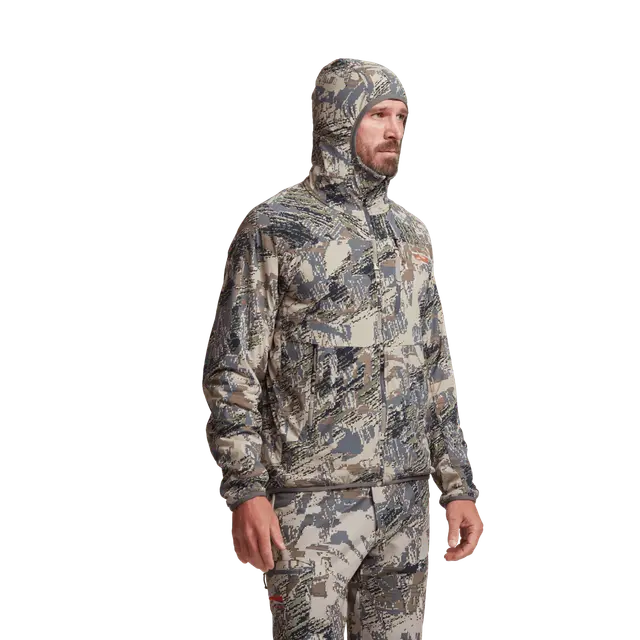
Ambient 100 Hooded Jacket
Active insulation that adapts.
Layer 5 - Windstopper Jacket: The Force Multiplier
Key product: Jetstream Jacket
This crucial outer layer blocks heat-robbing wind, which is an often underestimated threat. Convective cooling - the stripping of warmth from exposed skin by moving air - can drop your effective temperature dramatically within minutes. The Windstopper jacket is the answer.
"A Windstopper is a force multiplier," says Barklow. "Block the wind and you can stay warm. That should not be understated - if you can block wind in the backcountry, you stay focused and you stay on the mountain."
Often a Windstopper top is enough for warmth without adding additional bulk to the system. A Windstopper jacket provides immense efficiency by blocking wind and shedding light precipitation, reducing the time and effort required to stop and change layers. That means less movement, less noise and less disruption to the hunt.
Barklow's go-to for stalking with a bow in snow or intermittent rain? Windstopper.
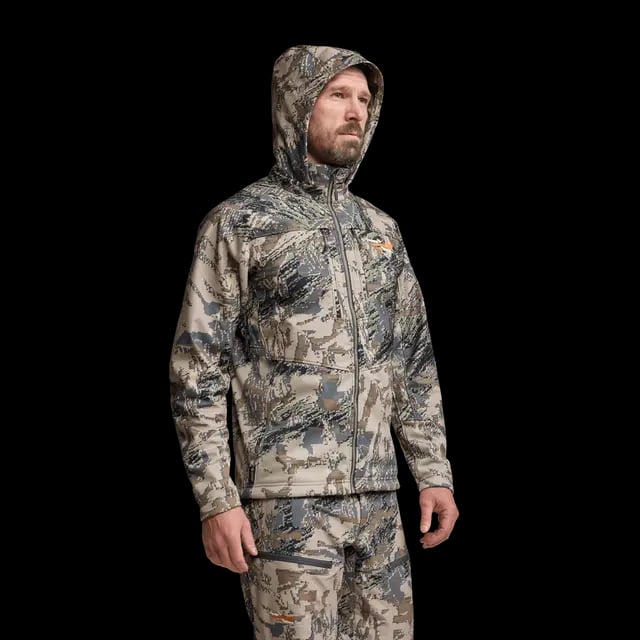
Jetstream Jacket
Our best-selling windproof jacket.
Layer 6 - Static Puffy Jacket: Your Survival Layer
Key product: Kelvin Aerolite Jacket
A puffy jacket is an essential part of any clothing arsenal, no matter the season. Barklow considers it part of his survival kit - not optional, not seasonal.
"No matter the time of year or what I'm doing, I always have some sort of puffy jacket with me.”
The lofted insulation traps heat as it radiates from the body, helping conserve energy and keeping your mind focused on the task. Applied when glassing, eating, or hanging around camp, the static insulation of a puffy jacket traps precious body heat critical for warmth and comfort.
It sits at the top of your pack so it's accessible the moment you take a break. It's a piece you'll live in all the time - it dries out your base layers and keeps you warm.
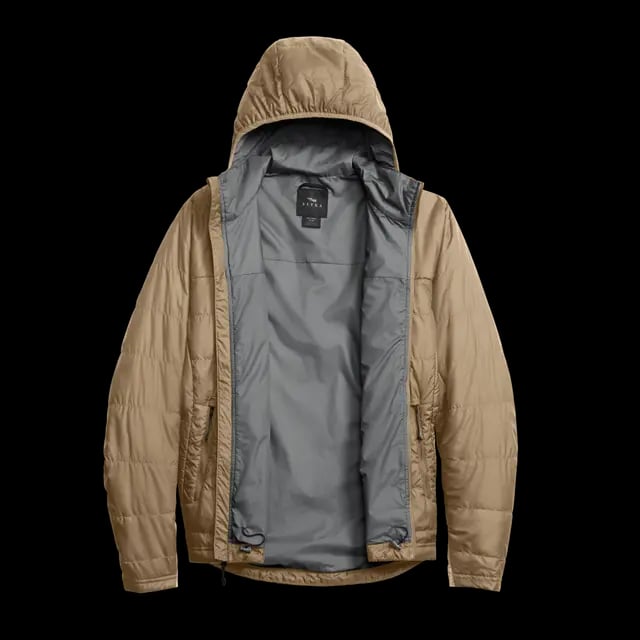
Kelvin Aerolite Jacket
Compressible synthetic insulation that excels in inclement conditions. Essential for any good hunting layering system.
Layers 7 & 8 - Rain Jacket & Pant: Non-Negotiable Insurance
Key products: Dew Point Jacket | Dew Point Pant
Rain gear, like the puffy, is part of Barklow's survival kit. "Nothing is going to keep you dry like rain gear. I always have it in my pack - just in case I get trapped above timberline and it starts to snow. If you get wet and then have to hike to generate body heat, it can become a fight for survival."
GORE-TEX hunting rain jackets and pants are a mandatory layer when getting hammered by an afternoon squall on an exposed ridge or navigating back to camp in a blinding snowstorm. Waterproof breathable rain gear manages moisture and keeps you dry in the worst weather, allowing you to depart the wild on your terms. Rain gear should have a place in all backcountry hunter's packs as insurance against harsh conditions.
Barklow's rule: carry rain gear even when you don't think you'll need it. "There are places you'll go where you spend the whole trip wearing it."
For hunters seeking hunting rain gear with full system coverage - the Dew Point jacket and pant paired with the complete 8-layer system underneath represents a holistic all-conditions setup.
Having confidence that your system will perform as prescribed–whether you’re deer hunting, sheep hunting, or duck hunting–provides a margin of safety and assurance, allowing you to focus more on the hunt and less on the forecast.
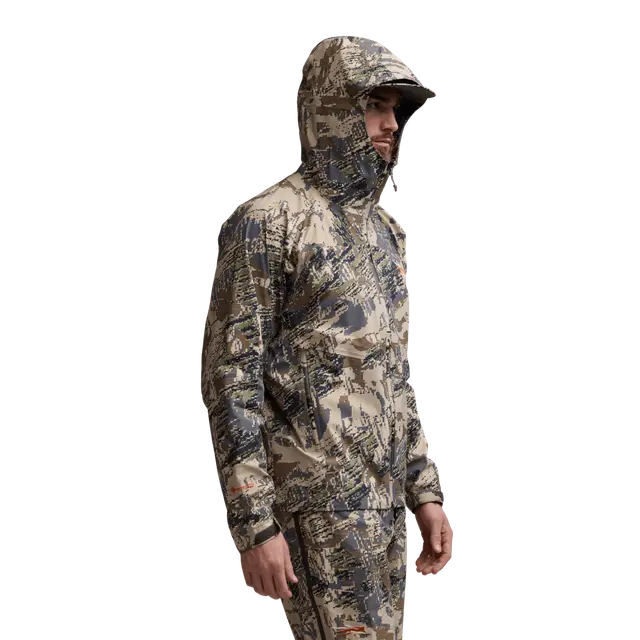
Dew Point Jacket
Ultra-packable waterproof protection for anything the weather throws.
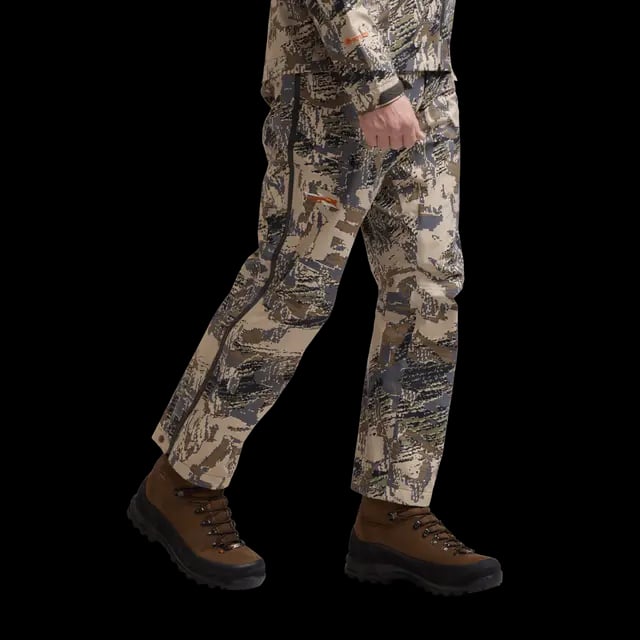
Dew Point Pant
Lightweight yet durable for wet weather and rugged environments.
Customizing The SITKA System For Your Hunt
One of the strengths of the SITKA layering system is its modularity. The 8 pieces are the architecture - what you actually carry and wear on a given day depends on your conditions, your activity level and your pursuit.
Whitetail deer hunting (tree stand): Prioritise scent control - go merino base layers. Add a static puffy and Windstopper for long sits in cold weather. Rain gear is pack insurance.
Mountain elk or mule deer (backcountry): Synthetic base for faster drying on active days. Windstopper for stalking. Puffy and rain gear always in the pack. Softshell pant for abrasion on rock and brush.
Early season hunting (warm weather): Base layer as standalone. Midlayer and Windstopper in the pack for evenings and glassing breaks. Rain gear always present.
Late season hunting (cold, snow): Full 8-layer system in play. Down puffy over synthetic. Rain gear doubles as wind and snow protection over everything.
Use the SITKA System Builder to configure your specific layering combination by pursuit, season, and conditions.
Customizing The SITKA System For Your Hunt
A complete hunting clothing system is a staple for all serious hunters. Every morning in the field, you assess conditions and choose which layers to wear, which to carry and which to leave at camp. The 8-layer system gives you the range to make that call correctly regardless of what the day delivers.
"When you assemble all 8 pieces," Barklow says, "it works together as a harmonious, holistic system. The knowledge applies across pursuits, across seasons. Break it down to individual components and it becomes simple to design a system that works for you."
That's the point. Technical hunting clothing doesn't have to be complicated - it just has to be built right.
Explore the full SITKA hunting clothing system by pursuit, or build your own layer-by-layer using the system builder. See Also…
The Top 5 Questions We Get On Each Layer In The System
Chris Bees’ Trusted Whitetail Cover System
Article Contents
How many layers do you need for hunting?
While every situation is different, the perfect hunting layer system can be achieved with 8 pieces of gear. With that setup, you can be truly prepared for any conditions in all seasons.
What's the difference between active and static insulation?
It’s all in the name. Active insulation holds onto some of the warmth you generate during activity while allowing enough breathability that you don’t overheat. Static insulation is designed to keep you warm when you’re keeping still – perfect for long sits in a tree stand or at camp.
How easy is it to dry SITKA Gear?
SITKA gear is designed to keep you dry, and be easy to dry back at camp. With the right layering system, the same designs that work to keep you comfortable all day will be ready to go again tomorrow.
Can I use the same layering system for different hunting pursuits?
Absolutely. While different conditions might call for different outer layers or camo patterns, the same principles apply to every pursuit. With the right layering system, you are covered for every pursuit.
Do I need a base layer bottom for hunting?
Base layer bottoms are an essential part of a well-rounded layering system. The more skin that’s in contact with a base layer, the more effectively each layer does its job.
What is the best base layer for a hunting system?
This is where your hunting pursuit and preferences come into play. Synthetic base layers offer the fastest-drying fabrics, while merino offers superior odor control. With this in mind, you can decide what qualities are right for you.
What is the best mid layer to wear hunting?
There is no one best hunting mid layer, because every situation is different. When choosing a mid layer, look for something that is tough enough to stand on its own yet breathable and mobile enough to fit underneath an outer layer when needed.
Why pack a puffy jacket on a hunt?
Puffy jackets are great because they pack down very small yet offer an immense amount of static insulation, which is critical to comfort during long sits and can even provide added safety when conditions turn brutal.
What hunting clothing do I need for early season vs. late season?
The idea of a complete hunting clothing system is to ensure you always have the right tool for the job. Within a hunting season and within a single day, conditions can always change. Having adaptable layers means you are prepared for everything from unusually warm days to freak winter storms.

Stay Connected
Join our community.
Get the latest gear innovations, SITKA films, expert insights, and more delivered to your inbox.
By providing your email and clicking "Sign Up", you agree to receive marketing emails from SITKA GEAR. You can unsubscribe at any time by clicking the link in any email. For more details, see our Privacy Notice and Terms & Conditions